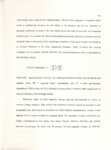
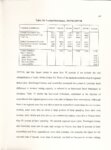
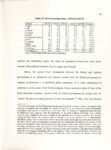
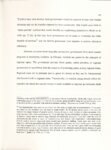
| OCR Text |
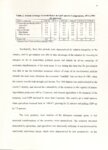
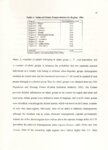
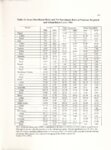
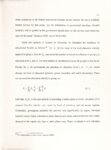
Show 18 1.2 For long time, ethnicity a and sociology, political science. economists. Cross-country the Ethnicity as a Basis for Federalism has been confined to the fields of Recently, however, empirical studies 1965-1990 have identified ethnic period that affects growth negatively (Alesina on the it has attracted the attention of growth differentials of countries diversity as et al. an important (1997), with its The paper can be was provocative title Africa's Growth Tragedy: that Africa's dismal economic argued explained in the seminal article of emphasized to a large degree by its high exogenous variable as a determinant of Easterly and Levin Policies and Ethnic Divisions. performance ethnic 1996; Wintrobe Warner 1995; Cohen 1995, 1995a). The importance of ethnic diversity performance in 2003, 1999; Bardhan 1997; Collier 2001, 2000, 1998; Easterly 2001; Easterly and Levin 1997; Sachs and economic anthropology, diversity," in the so period much so 1960-1989 that about 0.8 percentage points of the 2.3 percentage point gap in annual growth between Africa and the rest of the world is attributed to Africa's ethnic argument heterogeneity.i Their theoretical was: The political that were economy of ethnic divisions in Africa led to policy choices adverse to growth rates in individual countries. Where there based interest groups, each group would the own interests at expense of other interest groups. This would lead to rent-seeking policies like artificially controlled official exchange were many competing ethnically act in its rates and high black market unable to agree 7 on the premia. When polarized, interest groups kind of public goods they wanted, such as were what example, shows that Sub-Saharan African countries are more ethnically diverse country in other regions. Easterly and Levine (1997), using a standard measure of ethnic diversity, also find that Africa is home to thirteen of the fourteen most ethnically heterogeneous countries Anecdotal evidence, for states than any in the world and incidentally they performed poorly in the period 1965-90. 8More specifically, they concluded that "After accounting for the effects of ethnic diversity on education, political stability, financial depth, black market premiums, fiscal policy, and infrastructure development, ethnic diversity alone accounts for about 28 percent of the growth differential between the countries of Africa and East Asia" (Easterly and Levine 1997, p. 1207). |