| OCR Text |
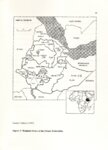
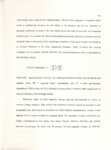
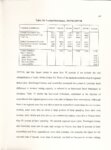
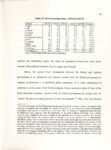
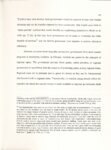
Show 30 In this chapter, years is reviewed. characterized state the historical evolution of the The chapter focuses building in Ethiopia review of the emergence of modem even though the country traces its that Ethiopian state in the last hundred the process of centralization that had on up until 1991. It starts out with the historical Ethiopia in history back the second half of the nineteenth century, to the birth of Christ. The focus is the current government: Haile Selassie' s two regimes and Mengistu Hailemariam's regime (1974-1991). The chapter concludes with preceded review of the federal system that the current government is 2.1. The Birth of the Modern In on the regime (1931-1974) a brief building. Empire": 1855-1907 the early decades of the century the Solomonid Empire grew increasingly fragmented. The large northern provinces of Shoa, Wello, Gojjam, and Tigray became divided into dozens of autonomous chiefdoms which engaged in what seemed like a constant war of all against all. This strife was compounded by divisions among the clergy, whose differences on subtle points of theological doctrine escalated into bitterly fought sectarian disputes. Yet the regenerative capacity of the Amhara system was such that this state of affairs was reversed: emperors Tewodros, Y ohannes, and Menilek gained effective following and reunited the empire. (Levine 2000, p. 156) By 1850, the disintegrated Empire had reached its lowest ebb. Yet within to defeat a European invasion and more fifty years, a united Ethiopia was than double its territory. This is a measure of the late nineteenth-century the which laid foundations of modem Ethiopia. (Clapham resurgence 1968, p. 12) Before this "resurgence," the Ethiopian empire was highly unstablc.l'' Regional 17"By "modem Ethiopia" we mean not that Ethiopia is modem by the definition of Western Enlightenment but that it became part of what Immanual Wallerstein calls the 'modem world system.' Modernity in Ethiopia meant three things: politically, the recognition of Ethiopia's sovereignty in the global interstate ... the hand, and the formation of the modem state with its monopoly of legitimate violence, on hand; economically, peripherilization in the world economy, which began with the export of essential commodities like coffee to the world market; and culturally, the immersion into the universalist project of the modem West, consummated in the secular religion of the Enlightenment: the idea of progress." (Tibebu 1995, p. xxii) system, on one the other 18"Even though a man might claim the title of king of kings, he had to be aware of the constant need to |