| OCR Text |
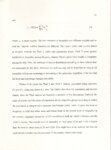
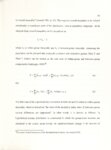
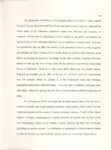
Show 25 multi ethnic nature of the country. problems of the country down to the Ethiopian political parlance as country," as homogenize (although dominating well as no history EPRDF the futile question." of Ethiopia and the problem," Ethiopian political the vast narrows EPRDF and its attempt by previous empire along government of the "ethnic all other ethnic groups in the the country he is question the "national academic circle believe that the ethnic group Indeed, the known in the supporters in the state is simply one and economic life of the nation builders to ethnically the values of the dominant ethnic group. Clapham fan of the ethnicization of or Ethiopian politics) summarizes this line of reasoning when he writes: Very broadly, there is a conventional explanation of regional conflict in Ethiopia. which accounts for these conflicts in terms of the political hegemony and economic exploitation imposed by the central Ethiopian state, and by the social groupings from which this is chiefly drawn. The Ethiopian state is, in this view, essentially the creation of the Orthodox Christian peoples of the northern highlands Amhara and Tigrayan, though with a substantial element of Christian and Amharized Drama who are often referred to as Abyssinian. With the powerful political and military organization built on the economic base provided by highland ox plough agriculture, this state has been able to dominate the surrounding peoples, its hegemony over whom has been justified by a sense of manifest destiny reinforced by religious superiority. With the vast accretion of strength provided in the second half of the nineteenth century by effective indigenous leadership and access to external armaments, the Ethiopian state both extended its territory and imposed on the conquered peoples a highly exploitative economic structure, which turned formerly .. - - independent peasants in the south and west into the vassals of central Abyssinian settlers and landlords. The wars of the late twentieth century view, the almost automatic consequence of the conquests of a hundred years earlier. (Clapham 1994, pp. 3-4) are, in this 9Many critics do not accept this line of argument. For example, Triulzi's reaction was: "Like most reactions oppressive conditions and denials of identity, the new historians' narratives were intrinsically ideological and emotionally-bound. The Ethiopia they portrayed was the Ethiopia they imagined or hoped for the future" (Triulzi 2002, p. 279). to |