| Title |
Bernie Rose, Interviews with Jews in Utah, Accn 998 |
| Alternative Title |
Accn 998, Interviews with Jews in Utah, Bernie Rose |
| Description |
Transcript (128 pages) of interview by Leslie Kelen with Bernie Rose on January 17, 1983 for the Interviews with Jews in Utah Oral History Project. |
| Creator |
Rose, Bernie, 1911- |
| Contributor |
Kelen, Leslie G., 1949-; Oral History Institute |
| Publisher |
Digitized by J. Willard Marriott Library, University of Utah |
| Date |
1983-01-17 |
| Date Digital |
2015-07-06 |
| Access Rights |
I acknowledge and agree that all information I obtain as a result of accessing any oral history provided by the University of Utah's Marriott Library shall be used only for historical or scholarly or academic research purposes, and not for commercial purposes. I understand that any other use of the materials is not authorized by the University of Utah and may exceed the scope of permission granted to the University of Utah by the interviewer or interviewee. I may request permission for other uses, in writing to Special Collections at the Marriott Library, which the University of Utah may choose grant, in its sole discretion. I agree to defend, indemnify and hold the University of Utah and its Marriott Library harmless for and against any actions or claims that relate to my improper use of materials provided by the University of Utah. |
| Subject |
Jews, American--Utah--Interviews; Rose, Bernie, 1911- --Interviews; Jews--Social life and customs |
| Abstract |
Rose (b. 1911) recalls growing up, school, religious influences, anti-Semitism, stories of his father's life, and participating in amateur boxing. He also talks about his separation from the Jewish community, practicing law during the Depression, prayer in the schools, and the issue of the separation of church and state. Other topics covered include Hitler, World War II, the differences between German and other ethnic Jews, serving in the army, interfaith marriages, and Jewish identity. 128 pages. |
| Type |
Text |
| Genre |
oral histories (literary works) |
| Format |
application/pdf |
| Extent |
128 pages |
| Language |
eng |
| Rights |
 |
| Is Part of |
Interviews with Jews in Utah collection, 1982-1988, http://archiveswest.orbiscascade.org/ark:/80444/xv70657/ |
| Scanning Technician |
Niko Amaya; Halima Noor |
| Conversion Specifications |
Original scanned with Kirtas 2400 and saved as 400 ppi uncompressed TIFF. PDF generated by Adobe Acrobat Pro X for CONTENTdm display |
| ARK |
ark:/87278/s61k15hv |
| Topic |
Jews, American; Jews--Social life and customs |
| Setname |
uum_iju |
| ID |
902006 |
| Reference URL |
https://collections.lib.utah.edu/ark:/87278/s61k15hv |
| Title |
Page 120 |
| Format |
application/pdf |
| Setname |
uum_iju |
| ID |
901996 |
| OCR Text |
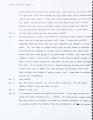
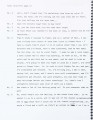
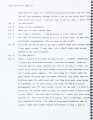
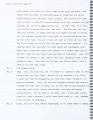
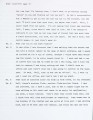
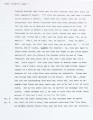
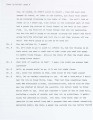
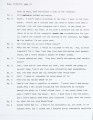
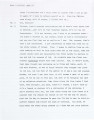
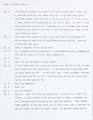
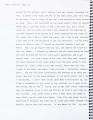
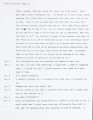
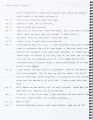
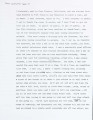
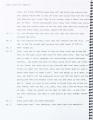
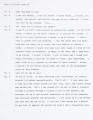
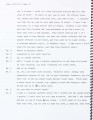
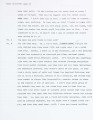
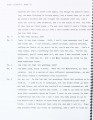
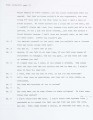
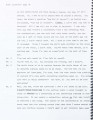
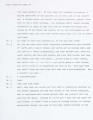
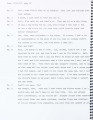
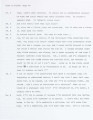
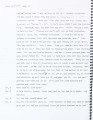
Show Rose (1/25 / 83 ) page 48 Mr. K Mr. R Mr. K Mr. R Mr. K Mr. R him about it since, but I mean, in it's formitive years. Eut, I'll tell you why we wouldn't go up into the hills; we said that hypo-thetically we established a commander , and we gave him the decision to decide when we were to assemble. That's where we fell apart. No two people could agree on the point ~~where they would give up their money, where they would walk away from their money. The point at which I was prepared to walk away from my property rather than have it taken away from me at a later date •• the ~oint at which I would say "it's time for me to do something about it. If I'm going to die, I'm not going to die alone •• I'm going to take a son-of-a-bitch with me". Do you follow me? At what point was I willing to walk away from my money so I could go commit myself to that other purpose? And it wasn't the dying, it was the walking away from my money. And I ~ean by MY,I mean me collectively. Eve body had a different ulace at which he would walk away from his money, so that moment of assembly could never arrive and that's where the whole scheming and planning stopped, and it's a hell of a good thing that it didn't happen here. That nuts it in a nutshell, doesn't it? Yeah, it puts it in a nutshell, but that's where it broke up. Whe can I walk away from my money? That's exactly what happened to my family. A portion of my family escaped because they walked away more quickly than the others. Now, what impelled them to move away? Was it that they thought of their money, or they thought more of their lives? Right, they felt the danger more powerfully. That's it, but it's like you say, part went and part didn't. |
| Reference URL |
https://collections.lib.utah.edu/ark:/87278/s61k15hv/901996 |