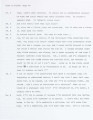
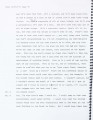
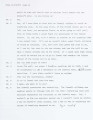
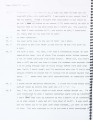
| Title |
Bernie Rose, Interviews with Jews in Utah, Accn 998 |
| Alternative Title |
Accn 998, Interviews with Jews in Utah, Bernie Rose |
| Description |
Transcript (128 pages) of interview by Leslie Kelen with Bernie Rose on January 17, 1983 for the Interviews with Jews in Utah Oral History Project. |
| Creator |
Rose, Bernie, 1911- |
| Contributor |
Kelen, Leslie G., 1949-; Oral History Institute |
| Publisher |
Digitized by J. Willard Marriott Library, University of Utah |
| Date |
1983-01-17 |
| Date Digital |
2015-07-06 |
| Access Rights |
I acknowledge and agree that all information I obtain as a result of accessing any oral history provided by the University of Utah's Marriott Library shall be used only for historical or scholarly or academic research purposes, and not for commercial purposes. I understand that any other use of the materials is not authorized by the University of Utah and may exceed the scope of permission granted to the University of Utah by the interviewer or interviewee. I may request permission for other uses, in writing to Special Collections at the Marriott Library, which the University of Utah may choose grant, in its sole discretion. I agree to defend, indemnify and hold the University of Utah and its Marriott Library harmless for and against any actions or claims that relate to my improper use of materials provided by the University of Utah. |
| Subject |
Jews, American--Utah--Interviews; Rose, Bernie, 1911- --Interviews; Jews--Social life and customs |
| Abstract |
Rose (b. 1911) recalls growing up, school, religious influences, anti-Semitism, stories of his father's life, and participating in amateur boxing. He also talks about his separation from the Jewish community, practicing law during the Depression, prayer in the schools, and the issue of the separation of church and state. Other topics covered include Hitler, World War II, the differences between German and other ethnic Jews, serving in the army, interfaith marriages, and Jewish identity. 128 pages. |
| Type |
Text |
| Genre |
oral histories (literary works) |
| Format |
application/pdf |
| Extent |
128 pages |
| Language |
eng |
| Rights |
 |
| Is Part of |
Interviews with Jews in Utah collection, 1982-1988, http://archiveswest.orbiscascade.org/ark:/80444/xv70657/ |
| Scanning Technician |
Niko Amaya; Halima Noor |
| Conversion Specifications |
Original scanned with Kirtas 2400 and saved as 400 ppi uncompressed TIFF. PDF generated by Adobe Acrobat Pro X for CONTENTdm display |
| ARK |
ark:/87278/s61k15hv |
| Topic |
Jews, American; Jews--Social life and customs |
| Setname |
uum_iju |
| ID |
902006 |
| Reference URL |
https://collections.lib.utah.edu/ark:/87278/s61k15hv |
| Title |
Page 7 |
| Format |
application/pdf |
| Setname |
uum_iju |
| ID |
901883 |
| OCR Text |
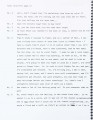
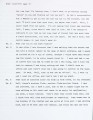
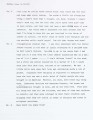
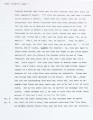
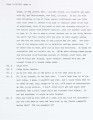
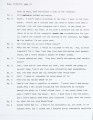
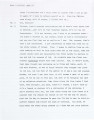
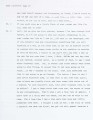
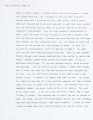
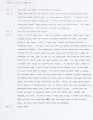
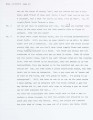
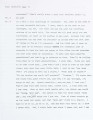
Show Rose (1/17/83) page 6 Mr. K Mr. R Bryant with that job that things turned out for us pretty well. From that time poverty was behind us. It was no great wealth, or anything like that ••• But you were O.K. Yeah. Then of course, my uncles and aunts, they got better to American life and got better jobs, and the older ones of the cousins went to work even though there was that different family ethic in those days. You see, in those days as soon as a kid was able to go to work, the question was how much of what you earn do you have to contribute to this house to keep it going? I can remember the bitter quarrels between my cousins who were older I am and I'd sit around and listen to it about ••• I don't know wha they'd make, maybe $5 or $6 a week •• and my aunt and uncle would be screaming at them that you've got to give me '4 a week and the kid would say "no, I'tn only getting $6, I'm only going to give you $2". And they'd argue back and forth about that, and that was always a }. .~ - .. , . .~~ r t source of quarrel .. them. I can't remember any kid refusing to give anything; there was always the quarrel about how much they had to give. They knew there was a responsibility for the house. You have to remember that I was just about in the middle of the generations of all my cousins who are alive; there might be some as old as 82 or 84 now, and I was a little kid when their money was already coming into the house where ever I was because I ... always went to the oldest one first like my Aunt Mary, you see. So, probably had kids working, or at least one, when I got there. By the time I got to my aunt's house, and while my mother might not have paid a full tithing for my staying there, there was by that |
| Reference URL |
https://collections.lib.utah.edu/ark:/87278/s61k15hv/901883 |