| Title |
Bernie Rose, Interviews with Jews in Utah, Accn 998 |
| Alternative Title |
Accn 998, Interviews with Jews in Utah, Bernie Rose |
| Description |
Transcript (128 pages) of interview by Leslie Kelen with Bernie Rose on January 17, 1983 for the Interviews with Jews in Utah Oral History Project. |
| Creator |
Rose, Bernie, 1911- |
| Contributor |
Kelen, Leslie G., 1949-; Oral History Institute |
| Publisher |
Digitized by J. Willard Marriott Library, University of Utah |
| Date |
1983-01-17 |
| Date Digital |
2015-07-06 |
| Access Rights |
I acknowledge and agree that all information I obtain as a result of accessing any oral history provided by the University of Utah's Marriott Library shall be used only for historical or scholarly or academic research purposes, and not for commercial purposes. I understand that any other use of the materials is not authorized by the University of Utah and may exceed the scope of permission granted to the University of Utah by the interviewer or interviewee. I may request permission for other uses, in writing to Special Collections at the Marriott Library, which the University of Utah may choose grant, in its sole discretion. I agree to defend, indemnify and hold the University of Utah and its Marriott Library harmless for and against any actions or claims that relate to my improper use of materials provided by the University of Utah. |
| Subject |
Jews, American--Utah--Interviews; Rose, Bernie, 1911- --Interviews; Jews--Social life and customs |
| Abstract |
Rose (b. 1911) recalls growing up, school, religious influences, anti-Semitism, stories of his father's life, and participating in amateur boxing. He also talks about his separation from the Jewish community, practicing law during the Depression, prayer in the schools, and the issue of the separation of church and state. Other topics covered include Hitler, World War II, the differences between German and other ethnic Jews, serving in the army, interfaith marriages, and Jewish identity. 128 pages. |
| Type |
Text |
| Genre |
oral histories (literary works) |
| Format |
application/pdf |
| Extent |
128 pages |
| Language |
eng |
| Rights |
 |
| Is Part of |
Interviews with Jews in Utah collection, 1982-1988, http://archiveswest.orbiscascade.org/ark:/80444/xv70657/ |
| Scanning Technician |
Niko Amaya; Halima Noor |
| Conversion Specifications |
Original scanned with Kirtas 2400 and saved as 400 ppi uncompressed TIFF. PDF generated by Adobe Acrobat Pro X for CONTENTdm display |
| ARK |
ark:/87278/s61k15hv |
| Topic |
Jews, American; Jews--Social life and customs |
| Setname |
uum_iju |
| ID |
902006 |
| Reference URL |
https://collections.lib.utah.edu/ark:/87278/s61k15hv |
| Title |
Page 110 |
| Format |
application/pdf |
| Setname |
uum_iju |
| ID |
901986 |
| OCR Text |
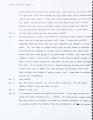
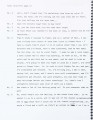
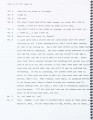
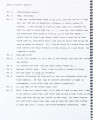
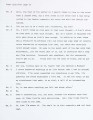
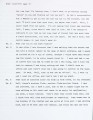
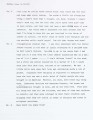
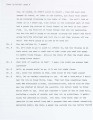
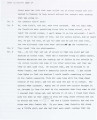
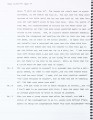
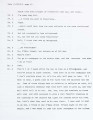
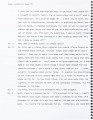
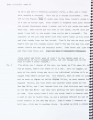
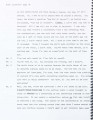
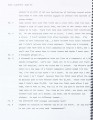
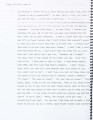
Show Rose (1/25/83 ) page 38 rl-r. K Mr. !1 }~r. K ~r. R iV:r. K ~r. R Mr. K Mr. !1 Mr. K ordinary convention of being Jewish than many Jewish kids. t!¢ Mary and I are going to a cousin's in Washington D.C. who's never been barmitzvahed, not he or his brother. Let me ask you this question. Non of these are easy questions. Do you at all regret the mixed marriages in the · past? I regret only one thing and that's that I never saw a son of mine barmitzvahed. That's the only thing I regret in terms of what eve the past was, but I don't spend my life dwelling on the mistakes of yesterday, if they were mistakes. Let me ask the other side. Do you feel you gained somet~ing throu that thatt you wouldn't have in another way? No. I don't weigh, at least I'm not aware that I ever have. For me to say that, about something I don't know about, for example ••• for me to say "gee, this only weighs so many pounds, and I gave up so many more pounds". You know the book 'Portnoy's Complaint'? Yes, I read the first 50 pages of it. Well, one of the things that ~ook talks about is the fact that in Jewish households in emphasizing Jewishness and exclusivity it makes the non-Jewish women sometimes look sexier, you know, they are more risque. You know, it's more like the forbidden fruit, yo might almost say. It was the other way around. The ones you weren't allowed to touc were the Jewish girls. Right, but they were the ones you had to marry. The other ones couldn't marry because they were ¢~ somehow soiled or forbidden more animalistic or however the other feels •• they were the other. |
| Reference URL |
https://collections.lib.utah.edu/ark:/87278/s61k15hv/901986 |