| OCR Text |
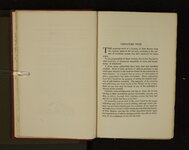
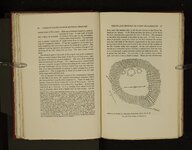
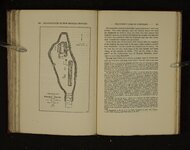
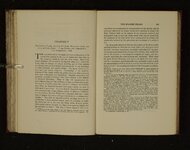
Show SPANISH RULE, 1700 TO 1822 465 on his journey to Santa Fé, all of which indicates an ignorance of the country. It is difficult, too, to understand the doctor’s actions, He had no interest in the claim against La Lande, for the collection of which he went to Santa Fé. Why then, upon his arrival, did he represent himself as a Frenchman, who had accompanied a hunting party and tell the story that Salcedo wrote to Wilkinson in his letter of May 20, 1807; whether he expected to return, and, if so, how; and why did Pike deny that he belonged to his force? All this is mysterious, unless we accept the idea that Pike really was engaged in reconnoitering the Spanish frontier.*% Ten days later a Spanish dragoon and an Indian made their appearance at the fort. Pike regarded them as spies. From these Pike learned that Dr. Robinson had reached Santa Fé in safety ; they noted the construction of the stockade, its location, ascertained 494 Major Pike says, Ibid, p. 232, note: ‘‘The demands which Dr. Robinson had on persons in New Mexico, although originally legitimate, were in some degree spurious in his hands; the circumstances were as follows: In the year 1804 William Morrison, Esq., an enterprising merchant of Kaskaskias, sent a man by the name of Baptiste La Lande, a Creole of the country of Missouri and of La Platte, directing him, if possible to push into Santa Fé. He sent in Indians, and the Spaniards came out with horses and carried him and his goods into the province. Finding that he sold the goods high, had land offered him, and that the women were kind, he concluded to expatriate himself, and convert the property of Morrison to his own benefit. When I was about to sail, Mor- rison conceiving that it was possible I might meet some Spanish factors on the Red river, intrusted me with the claim, in order if they were acquainted with When on the fronLa Lande, I might negotiate the affair with some of them. tiers, the idea suggested itself to us of making this claim a pretext for Robinson to visit Santa Fé. We therefore gave it the proper appearance, and he marched for that place. Our views were to gain a knowledge of the country, the prospect of trade, force, &c, whilst at the same time our treaties with Spain guaranteed to him, as a citizen of the United States, the right of seeking the Tecovery of all just debts, dues or demands, before the legal and authorized tribunals of the country, as a franchised inhabitant of the same, as specified in the 22nd article of the treaty. ‘a ; ‘“‘As it was uncertain whether this gentleman would ever join me again, I at that time committed the following testimonial of respect for his good qualities a to paper, which I do not at this time feel any disposition to efface. ‘‘He has had the benefit of a liberal education, without having spent his time as too many of our gentlemen do in college, in skimming over the surfaces of Science, without ever endeavouring to make themselves masters of the solid With these qualifications he foundation; but he had studied and reasoned. possessed a liberality of mind too great ever to reject an hypothesis, was not agreeable to the dogmas of the schools; or adopt oe it, because it ha the eclat of novelty. His soul could conceive great actions, and his hand was Teady to achieve them; in short, it may be truly said, that nothing was ener his genius, nor anything so minute that he conceived it entirely unworthy o consideration. As a gentleman and companion in dangers, difficulties and hardships, I, in particular, and the expedition in general, owe much to his exertions. |