| OCR Text |
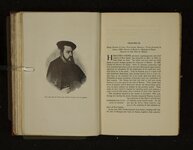
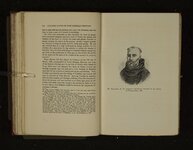
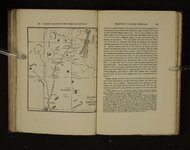
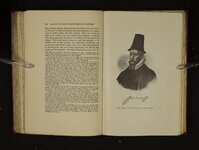
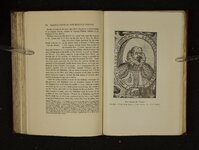
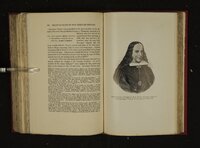
Show 116 LEADING FACTS OF NEW MEXICAN HISTORY THE was given command of the relief expedition and was named governor captain-general, and adelantado of all the territories he might We able to reduce. In the preparations for this expedition he spent his entire fortune. The tribe of Indians he was specifically commissioned to conquer was the Pariembos, a wild tribe of Paragua y Indians, living on the great plains bordering on the Rio de la Plata. . After many difficulties Cabeza de Vaca landed at St. Catherine’s in Brazil, in March, 1541, marching from that point across an ee unknown country to the river Parana. In this march, although he encountered dangers which exceeded anything he had ever experienced in North America, he showed the same enterpri se and determination and the identical disposition and policy toward the natives which he had exhibited in his treatment of the savages whom he had met on his journey from the Gulf to San Miguel de Culiacan. He arrived at his capital on the 11th day of March, 1542. Here he encountered the opposition and hostility of the heutenant-governor Trala, who secretly worked against him and finally succeeded _ raising an insurrection, in which Alvar Nufiez was seized and thrown into prison. He was kept under guard for two years, when he was sent to Spain. He was accused by Irala of the aeons crimes. He was thrown into prison to await trial, and while constantly iar b vice ing for his release upon bond, he remained in jail for six years Finally, in 1551, the Council of the Indies rendered judgment ‘i which he was deprived of all his titles and the privileges which pertained to them. The decree included banishment to Africa for a term of eight years — a judgment which undoubt edly was not carried into effect, for, it is said, the emperor granted him a pension of two thousand crowns and gave him a place in the Royal Audiencia**® of Seville, in which city he died at an advanced ‘i 125 Charlevoix, oix, Letters Ts : : ‘‘T } nave, indeed, i seen a memorial j ich it i that he w as immediately gratified with a seat in the Coun i f ae ie : Saath, Buckingham, Relation, p. 251, note ee dandelier, A. F., Contributions, p. 27, and note i, , says: Says: Paraguay ‘*On nana hi dlipee oda. aguay tlthere isi ample ma a i aterial in Oviedo, Herrera, and Gomara. In addition to these there is Cabeza de Vaca’s ow : ; - n statement, printed in 155 2 $1016 Cocnentars Rio de eran (e hex de of Cabeza‘Sibdehnd icles et is fro e Ate, atos de destierro en O en : r = oe Cabeza de Vaca, Adelantado y an The statement about the latter oo vol. 3). Yedia, Historiadores Nunez Cabeza de Vaca primitivos 4 privacion os days (p. xaijit: ‘aye oficio y 4 seis de Vran, con seis lanzas; apel6, y en revista salié libre, aa: FIRST SPANISH EXPLORERS 117 age. Thus ended the career of a most remarkable man. His life’s portion was little less than the ‘‘stings and arrows of outrageous fortune.’’ His courage and powers of endurance were most remarkable; he was gentle, kind, and considerate, and entirely unlike the great majority of Spanish explorers, whose greed for gold and the spoils of conquest are exemplified in the methods of Cortés, Alvarado, Nufio de Guzman, Pizarro, and many others, the record of whose deeds is a story of outrage, slavery, plunder, and rapine. Castillo returned to New Spain, resided in the City of Mexico, married a widow, and was granted half the rents of the Indian town of Tehuacan. Alvar Nufiez Cabeza de Vaca and his three companions were the first men of alien birth to set foot upon the soil of what is today To the student of New Mexican history the question New Mexico. whether or not these survivors of the ill-fated Narvaez expedition Without discussever passed over New Mexican soil is interesting. ing several points reached by Narvaez prior to his embarkation at the Bay of Horses (Apalachee bay) there is no doubt and the historian is justified in declaring that the great river which emptied a such great quantities of water into the Gulf of Mexico, with such was Malhado of island The powerful current, was the Mississippi. dole dos mil ducados de pension en Sevilla. cual falecié ejerciendo la primacia su persona, ignorandose Retirose 4 aquella ciudad del consulado con mucha en la honra ? quietud de en afio de su muerte.’ _ The consulate of Seville was It consisted of a ‘prior’ and one consul, who were quite a responsible office. and ship-owners. annually elected by those who traded with the Indies, freighters of vessels, the cargo Their duty was to regulate and superintend the fitting out and the trading with America in general.’’ ‘‘In regard to Cabeza de Vaca’s personal character, Bandelier, A. F., Ibid.: that the leading chronthe opinions of older writers differ; still it is noteworthy Were I to formulate iclers, Herrera, Oviedo, and Gomara, speak well of him. man, rather visionary, a judgment, I would qualify him as a well-intentioned of an expeditionready for any personal sacrifice, but out of place at the head had never It was probably injudicious to intrust Cabeza de Vaca, who ary corps. one he occupied in been a military man, with such a difficult position as the him On the other hand it is clear that the Crown desired to reward Paraguay. North America. for all the hardships and sufferings he had gone through in like and, ability, his But the position with which he was rewarded was above to undera great many others, his failure to perform what he was incompetent It is stated that he was at first banished to take, put an end to his career. The fact that this sentence was cancelled, and that he was completely Oran. absolved, tends to show that he was rather a victim than a cause of the disorders which occurred in Paraguay during his administration.’’ |