| OCR Text |
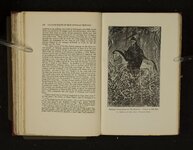
Show 156 WN! SR |) if \ ; . 4 LEADING FACTS MEXICAN OF NEW JOURNEY HISTORY spiration. On the way back he determined to see this valley. He did not dare to venture into it, because, as he says, he believed that those who would come after him to settle the country, could do it safely. That he could not further risk his life and thereby, if anything should happen to him, prevent the world from knowing what he had already witnessed. He went as far as the entrance, and says that he saw seven good looking settlements in the distance, from which arose a good deal of smoke. From this point the friar returned to San Miguel and thence to Compostella, where he found the governor and made a report of the wonderful things he had seen and heard. This report, reduced to writing, was sent to the viceroy, who, in turn, sent it to the emperor, accompanying it with a full account of the ill success of several other attempts to discover countries abounding in gold, and adding, ‘‘It seemeth unto all men that it was God’s will to shut up the gate to all those who by strength of human force have gone about to attempt this enterprise, and to reveal it to a poor and bare-footed friar.’’ Friar Marcos also sent a report or notification of his return to the provincial of his order and asked for further instructions. While at Compostella he certified, under oath, before the viceroy and Coronado, that everything contained in his report of the journey to the Seven Cities was the truth.1° There is no doubt that the negro, Estevan, met with a deserved fate. He paid no attention to the orders of the viceroy, who had THE MANNER OF THE DEATH OF ESTEVAN feathers around his arms and legs, he traveled in state. Carrying with him a gourd, decorated with two bells and feathers, one white and one red, he sent messengers ahead, displaying the gourd as a symbol of his authority. This he had seen done in his travels across the state of Texas, when with Cabeza de Vaca. He was also attended by a large number of handsome women, whom he had attached to his party along the route. He also carried turquoises, and the Indians who accompanied him were fully convinced that while in his company and under his protection no danger or ill could befall them. Arriving within a day’s journey of Cibola, the negro again disobeyed the orders of Friar Marcos, for, instead of awaiting the coming of the friar, he sent messengers, bearing his gourd, to the city to notify the chief that he came seeking peace and to cure the sick.*® When the gourd had been delivered to the chief and he had observed the bells he became very angry, cast the gourd upon the ground, and eried: ‘‘I know those people, for those bells are not of our fashion; tell them to return at once, or not a single man of them will be left alive.’’ Sadly the messengers returned to the negro, fearing to tell him what had been the character of their reception, but finally they Estevan, however, was far from disdecided to advise him fully. mayed, and told them to have no fear, as he intended to go to Cibola and that he would be well received. Accordingly he proceeded on his way and reached Cibola at sunset, with more than three hundred The chief would not permit him to attendants, men and women. a lodging place outside its limits. given was he but town, the enter accompanying everything he had, and both food and drink were and his company.?®° an ambassador and gave out 166 Winship, George Parker, Coronado Expedition, p. 363: ‘‘The eredit and esteem in which the friar was held by the viceroy is as convineing proof of his oe, that derived from a close scrutiny of the text of his narrative. per + testimony was given in a letter which he sent to the king of Spain, Marcos, the premiere lettre which Ternaux by Friar written This le report transl: : ng a -ed from Ramusio. letter spoke in laudatory terms of the friar and It is at least sufficient to counterun-biasedof evidence. not wholly rs the18 hostile . alance declarations Cortés and Castafieda, both of whom had far less creditable : . ; os able reasons for traducing the friar than Mendoza Select ee: vine 157 commanded him implicitly to obey the instructions of the friar.1*7 After leaving the friar he took upon himself all the authority usually that he was an envoy of the viceroy; gaily bedecked in bells and George TO CIBOLA Parker, Ibid, p. 355: ‘“The negro, had for praising Estevan, had been viceroy to obey Friar Marcos in everything, under pain of serious Then, by order of the chief of Cibola, the negro was deprived of refused to him . . Castafieda preserves a story that Estevan was sent ahead, not punishment. he did not get on “a only to explore and pacify the country, but also because an with other With Friar his superior, who objected to his eagerness in collecting the turquoises things which the natives prized and to the moral effect of his relations the women who followed him from the tribes which they met on their way. Marcos says nothing about this in his narrative, but he had different and with those of much more important ends to accomplish by his report, compared Castafieda, who may easily have gathered the gossip from some native. Rel. du Voyage de Cibola, Appendice 1V, Pp. 331; Herrera, vol. 11, Cae a ec. 6, lib. ix, eap. xv, p. 211. 3 ‘*While Cabeza bike Winship, Gebtaed Bask, Coronado Expedition, p. 360: natives had de Vaca and his companions were travelling through Texas, the |