| OCR Text |
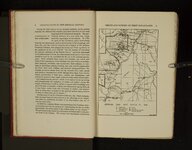
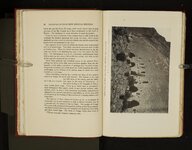
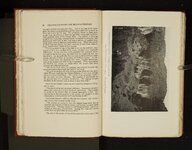
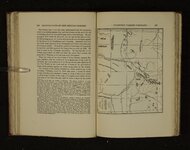
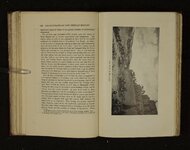
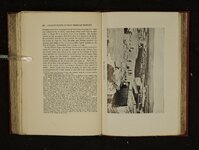
Show SPANISH RULE, 1700 TO 1822 417 at this time, and in all probability the total population of Spaniards in New Mexico was not less than 1,500. There is very little, from the standpoint of interest, which may be said of the rule of Cubero. In July, 1699, he visited the pueblos in the west, and the Moquis, who never had any regard for the Spaniards, sent representatives to Cubero, agreeing to rebuild the churches which had been destroyed and to receive the Franciscan missionaries.**® The Queres who had fled from the pueblos of Cieneguilla, Santo Domingo, and Cochiti, built a new pueblo on a stream called Cubero.® The vast plain in that vicinity is also known as the Cubero plain, and was doubtless so named because of the visit of Cubero at this time; this pueblo was known as San José de la Laguna,*° ; at this time. 418 Niel, Apuntias, 108-9, says that Moqui was visited 419 The new pueblo of the Queres submitted; also those of Acoma and Zufii as well. Bandelier, A. F., Investigations in the Southwest, Final Report, part ii, and fourteen ‘‘Nine miles northeast of the pueblo of Laguna, p. 314, says: north of Acoma, the little town of Cubero stands in the corner of a plain that Sierra de the which above mesas extends along the southern base of the dark This plain is fertile, and about fifteen San Mateo rises as from a pedestal. In its northeastern corner miles long from west to east, and five to six broad. the Picacho stands up like a black tusk. The largest one plain around Cubero. i hundred souls, with pottery of the There are a number of ruins on the was a pueblo capable of sheltering a coarsely glazed kind, some corrugated black and white and red and and indented ware, and a sprinkling of theof ancient the usual size and form, and more black. Excavations have revealed cells to the class of those on the pottery. Whether this ruin, which seems to belong Rio Grande and about the Salines, is claimed by the people of Acoma as one of their former pueblos or not, I am unable to say. are common on the Cubero “Remains of detached houses, all built of stones, distinctively Plain, and the pottery with which these ruins are covered is of the of the At the Rinconada de San José, on the western extremity in a semlaround bends Plain, at the foot of a mesa the eastern front of which in size and in arrangement to circle, I found fifteen of these dwellings, similar of Socorro and of Abé. the clusters whizh I have already described in the vicinitytraced. There my attenIn most eases the walls of the houses could be easily and my suspicions ruins, of tion was for the first time directed to this class ancient type. at first a peculiar type, and were not, as I awakened that they might represent dwellings. ’’ Supposed, ancient summer-houses of the inhabitants of communal or Hoe 752: p. Indians, part i, hs. Hodge, F. W., Handbook of American same popular name, 18 ht on th Whose principal pueblo, which bears the N. Mex., about 45 miles west € south bank of San José river, Valencia county, dating It was formerly the seat of a Spanish mission, fro of Alburquerque. Acoma as a visita having 1699, and July, in pueblo a as ment atte its establish consist of a Spanish Grant of 125,225 The lands of the Lagunas as The Laguna people are eomposed of 19 eg of desert land. Kohala (Bear), Ohshaheh (Sun), marked with X being extinct: nake), Sqowi (Rattlesnake), ais i adger ), Tyami (Eagle), Skursha (Water-s Yellow-corn, 1782. Siti oS Cho ee Saki (Coyote), Yaka (Corn, divided into Kochinish-yaka, or |