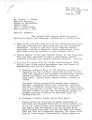
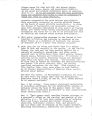
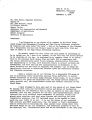
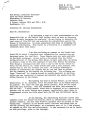
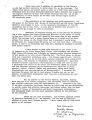
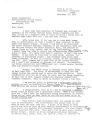
| OCR Text |
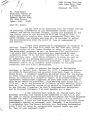
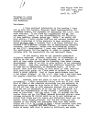
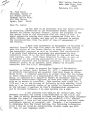
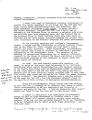
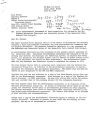
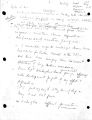
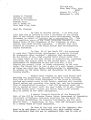
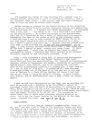
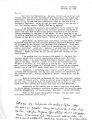
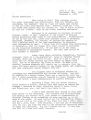
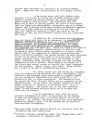
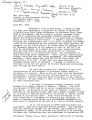
Show 2. believe some questions are confusing, as stated by Debbie Linke. Where you need clarification, we will gladly provide it. In my second phone call with Debbie Linke, December 5 in Provo, to inform you of CRCUP Advisory Board decision requesting written answers, Ms. Linke expressed great regret at this decision. She reiterated that you would not be able to provide answers for three to four months, that the Bureau was understaffed, overworked, and on a hiring freeze, that a meeting would have provided us realistic expectations as to what would be provided us in written form, and that your immediate response to CRCUP now would be one of assuring us that you would provide answers that you could when you could. In addition, Ms. Linke stated that the Bureau does not break down costs, as we requested, by construction •feature, nor did it calculate costs on a per acre foot of water developed, nor separate EIS expenditures, and cost/ benefit ratios were factored in the larger Project purpose, not separated out.* We know this. These are exactly the kind of questions we need specific information on. In view of a one to possibly three billion dollar expenditure of public monies, and in view of the complexity of feature constructions and water allocation purposes, the leeway allowed the water developer in the use of public monies needs to be questioned. To quote Idaho's Governor Evans, speaking about tax revision in the State, "Democracy works only when citizens can make informed judgements on public affairs. Today there is no excuse for a tax (substitute water) system so complex that those judgements are not possible. Every citizen pays taxes. Every citizen has a right to be able to understand his taxes." Ms. Linke stated that the Bureau was complying with the Principles and Standards for water development, with directives and interest rates established by Congress (which are not calculated individually by water projects) - all dictated by law, or other constraints. The Bonneville Unit has passed the Water Projects Review and was supported by the Administration. In any event, she stated, methods of determining costs can be looked at in different ways: it is a matter of opinion. The Bureau sees it one way; Professor Power,*"*Ln his Economic Analysis would see it another way; CRCUP sees it another. I am to understand, then, that we can be provided information on costs as calculated by the Bureau, as they have developed this, to provide answers to our own questions. If, however, the Bureau itself has never generated answers to certain costs, I do not foresee how we can do so from available information. *The only funds broken down by project are Section 8 funds for mitigation and land acquisition. **Economic Analysis, Bonneville Unit, CUP; Thomas Power, Dep't Economics, University of Montana, 1978 |