| OCR Text |
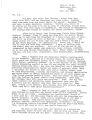
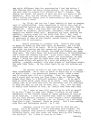
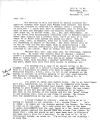
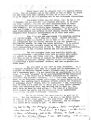
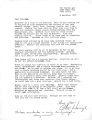
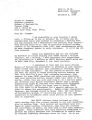
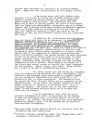
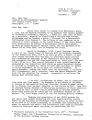
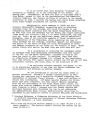
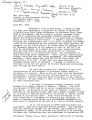
Show At the time of the Sierra Club, NRDC suit, while it was determined that water was not available by the court, in fact water was available but Utah State University and Van Dam studies for Salt Lake Commission attesting to this had not been completed. The decision, then, was based on faulty information? In any event, the conclusions of the suit do not hold up today. 3. The Bureau of Reclamation has consistently maintained that the Bonneville Unit of the CUP, while made up of six systems, is one complete Unit. It has maintained that the diking of Provo and Goshen Bays on Utah Lake are a necessary part of the Jordanelle- Provo River M & I System since the water saved(by diking) from evaporation is to be used as an exchange for water in the Provo River which would then be stored in the Jordanelle Reservoir rather than be utilized around Utah Lake for agricultural irrigation. In actual fact there is no actual transfer of water out of Utah Lake to the Jordanelle Reservoir; the transfer is one of water rights. (Some 8,000 a f of water from the Strawberry Collection System is to be transferred to Utah Lake - but no water is to be transferred out., in the Transbasin Diversion from the Colorado River Basin. ) However, the Bureau is gow preparing a Draft EIS on the Jordanelle M & I System and is excluding Utah Lake. (It has a million dollazr research study going on Utah Lake but doesn't want to wait its conclusion.) From a discussion with Harold Sersland, Environmental Director, BuRec, on August 31, the statement was made that the basis for the Jordanelle M & I Draft EIS without Utah Lake was the Sierra Club suit. Stipulations of this suit were that each System of the Bonneville Unit was to have an EIS preparation. Under Bureau planning, Utah .Lake is considered a separate agricultural system. The question is: is a system by system EIS preparation in compliance with NEPA? And/or which has the higher priority in law - the Sierra Club suit or NEPA? In my reading of "NEPA in the Courts" - by Anderson, I am not satisfied that the preparation of the Bonneville Unit AS A SYSTEM of 6 separate systems is now considered legal. Nor do I know on what feasibility basis does each system be justified? The M & I System and the Power System of the Bonneville Unit bring a greater return on construction and carry the economic infeasibility of the Strawberry Collection System for irrigation. Since the entire 6 Systems are included in the Bonneville Unit to provide a 1:1 cost/benefit ratio as well as economic feasibility, should each System be commented upon economically in independent EIS's? * The Bureau initiated land purchases around the proposed Jordanelle Reservoir prior to preparing a draft EIS and was stopped by a Utah Sierra Club threat of noncompliance., with NEPA |