| OCR Text |
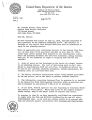
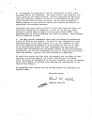
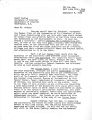
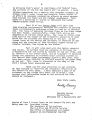
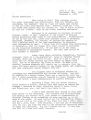
Show 2. which challenges Bureau economic calculations and cost benefit ratios. It contains conclusions of a report by Salt Lake County Attorney, Paul Van Dam, detailing water supply options available by State management which negate the need for CUP developed water until the year 2,00Q, If at all. And it contains a cost questionnaire on the Bonneville Unit a group of knowledgeable individuals in Salt Lake City prepared. This cost questionnaire asks basic economic cost questions and some of the bases on which the Bureau makes its calculations. In early September, 1978, we send this Issues Paper to Secretary Andrus requesting a written answer on the cost questionnaire. We are still waiting. We have made various overtures to responsible Interior staffs, without avail. The Bureau Regional Director, Nelson W. Plummer, called me from Salt Lake City early in December proposing a meeting with him to "discuss" Bureau methods of calculating water project costs "as a preliminary to providing written answers, if these prove needed". However, as I have indicated in one of my three replies to Mr. Plummer rejecting a meeting without basic cost information to work on for purposes of discussion, Mr. Plummer indicates the varying reasons why providing us written answers may not be possible. I have written Secretary Andrus again, asking him to reply as to when CRCUP can be provided written answers about a Project which will cost over one billion dollars of public monies. If we do not receive a reply by mid-January, we would appreciate newspaper coverage about our situation. I am forwarding this particular material at this time in order to provide the Washington Post with some background information. The CUP is complex, both in project structure, in planning for purposes of coming up with economic justifications, in environmental issues both on the Uintas and involving diking two marshes on Utah Lake to utilize water saved from evaporation for irrigation in that region as an exchange for providing irrigation water from a northern Utah river, the Provo. (Water from the Provo is to be dammed to provide industrial and municipal water for Salt Lake Basin - even though an extensive aquifer exists in this Basin, unutilized, on purpose - the tie in with the whole Bonneville Unit being one of selling water at a far higher price than can be obtained from irrigation water.) A meeting with Mr. Plummer is premature, also, in view of the fact that representatives from Salt Lake County plan to meet with the Bureau before February 1st to discuss plans for implementing 208 Water Quality Study conclusions. These Involve non-structural developments through efficient water management of available surface and ground waters, salvage of wasted waters, implementing a dual water system and initiating conservation measures. With budget time coming up, the Bureau may not need certain funds for structural |