| OCR Text |
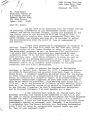
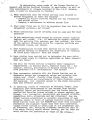
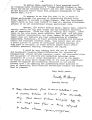
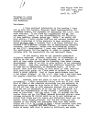
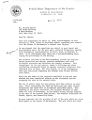
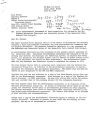
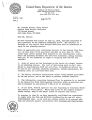
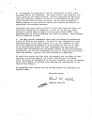
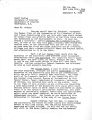
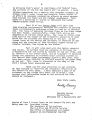
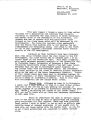
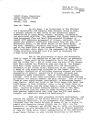
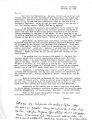
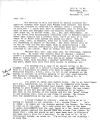
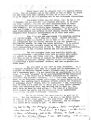
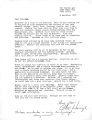
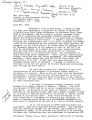
Show p 2. We have two young lawyers on our Advisory Board, one, Barbara Polich who is employed by Kennecott Copper in their environmental department. She represents the National Audubon Society, Utah Group, in water related issues and is my temporary replacement as Co-Chairman. While I am relating legal issues we discussed several weeks ago, I am not now in touch with any later developments. I believe that there is a potential membership to oppose the CUP in Utah but I also believe that opposition to the Project itself will need to be handled with some care in this State. Our group title was selected with this problem in mind. Very few of our trout fishermen members, not leaders, understand the issues, and a number see total opposition as a real threat to what they are taught to believe about natural resources in general, and about water specifically. However, we do have members who have paid taxes in protest to taxation without representation. In addition, we understand that some of the industrial community would themselves like see the CUP stopped (probably because of the high costs of CUP developed water) but they cannot publicly support opposition. I will state what I consider possible legal angles and the one suit I believe the Sierra Club is already involved in. 1. If water rights have been transferred frnm agricultural uses to Utah Power and Light (for power development in southwest" Utah perhaps in association with IPP) by the Bureau of Reclamation, does this transfer of water rights become a change of purpose under which the Bonneville Unit was originally presented to the public? Initially, public support for the CUP was based on CUP water development for agricultural purposes; we aue not sure that the Bdnneville Unit presentation, then, shifted grounds sufficiently to warrant challenge on a change of purpose. We know that, in fact, the transfer of water rights has taken place but are awaiting Bureau confirmation. The question is: does this change of purpose warrant preparation of a new EIS? 2. In the Sierra Club and NRD suit versus Stamm (1974) on the Bonneville Unit, the suit was lost, I believe, on the basis that the Bureau had, in fact, considered alternatives to the transbasin diversion of water and that there were noee*available. Since the Bonneville Unit Strawberry Collection System was tied in with the Jordanelle M & I System to supply water to Salt Lake County, and since the Salt Lake County A torney Van Dam's reports attest to the availability of sufficient water without CUP developed water at least until the year 2,000 - is there a legally invalid conclusion to the Sierra Club suit? 208 Water Quality studies in Utah County are, as yet incomplete but it is assumed that, if and when they are ^mpleted, that the adequacy of water in Utah County will also be found. (We were about to try to determine why the 208 Water Quality studies in both Utah and Uintah Basin Counties were incomplete, still.) |