| OCR Text |
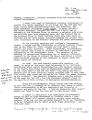
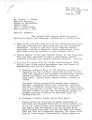
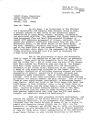
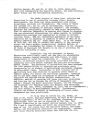
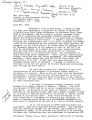
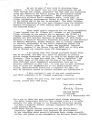
Show It also was recognized and so stated on page 2 of the statement that additional environmental statements, providing detailed information on the expected impacts of the various systems, would be done before a decision would be made to proceed with construction of that system. The approach, which we are pursuing, was considered to be logical, reasonable, and acceptable to the court for a project of this magnitude and complexity. 4. Changes in land use with urbanization in Salt Lake and Utah Counties have not resulted in large-scale waste of water previously used for agriculture. Because of its quality, the Utah Lake water delivered to Salt Lake County cannot be converted to municipal and industrial- use with conventional treatment processes. Large blocks of this water, purchased by Kennecott Copper Corporation and others, already have been put to low-quality industrial use. 4 The statement that 125,000 acre-feet of irrigation water a year is presently wasted in Salt Lake County is based on only one year of record (1972) when Utah Lake outflow was 135 percent of normal. Also, data which were used on acres actually irrigated and the quantity of water actually diverted to irrigated land are questionable; the use of onfarm irrigation efficiencies of 75 percent was unrealistic. Bonneville Unit plans do consider the integration of suitable high-quality water into future municipal and industrial supplies. 5. The ,Jsilt problem" in Utah Lake, a remnant of ancient Lake Bonneville, is not a result of erosion on Diamond Fork but has occurred over geologic time. The proposed pipeline down Diamond Fork is a feature of the pump-back storage alternative you mentioned in item 2. Geologic and other investigation work are required to determine the plan for and feasibility of that alternative. Fiscal year 1979 funds will not be used for construction of the pipeline. 6. The State of Utah has proposed that all surface waters geographically located within the outer boundaries of National Forests be designated as anti-degradation segments, including the Uintah Mountain streams which serve as the basic supply for the Bonneville Unit. The State, however, has not designated any of these streams as outstanding national resource waters, • • Dams and associated reservoirs are considered nonpoint sources of pollution by the Environmental Protection Agency and Utah State health representatives. Before Federal regulations covering nonpoint sources are determined, further studies are required. The State Division of Health, in its proposed water quality standards revision as required by Public Law 92-500, has classified various stream segments in the State as anti-degradation segments, but nonpoint sources except for septic tanks are not covered. • ' • - - ' • * * • • - . . . . . ........ I |