| OCR Text |
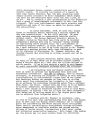
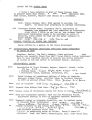
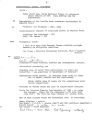
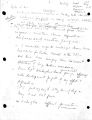
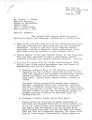
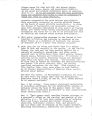
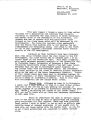
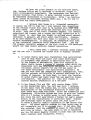
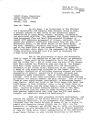
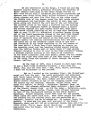
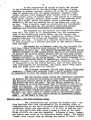
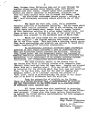
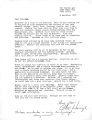
Show 4. both State and Federal Agencies , with the sometimes vigorous and sometimes not, support of their Superiors, to preserve adequate instream flows on the Uintas under CUP developments. Even though former Governor Rampton, in a 1965 Proclamation, stated that there would be no water allowed for the Uinta streams, and subsequently some 6,500 a f of water was to be provided for Currant Creek and the Strawberry River in the Strawberry Collection System, only (48,000 a f was proposed by the U.S.Fish & Wildlife Servicei 28,000 a f proposed by the Forest Service on portions of the streams on its lands; and 30,000 a f proposed by the State Division of Wildlife Resources until the Department was silenced) it is my opinion that the Federal Agencies have not explored or utilized all options available for protecting the Uinta streams and, most recently the policy of the Forest Service to not oppose the CUP became apparent, even though its responsibilities are to manage and sustain public resources associated with streams. The only quantification? of instream flow requirements on the Uinta Range have been carried out by the Forest Service by Mr. Chrostowski in the early 1960's. The studies included only South Slopes streams commencing with Rock Creek and moving eastward, not others involved in the Bonneville Unit. Mr. Chrostowski undoubtedly believed that all he could recommend was the absolute minimum stream flows which would sustain fisheries over the winter. This quantification does not provide sufficient water flow to preserve stream regimes and the associated flora and fauna dependent upon the streams. The U.S.Fish & Wildlife Service has carried out stream flow quantifications, but not on all streams, and by a different methodology. I am not convinced that this Agency's recommendation of 48,000 a f of water annually, itself,, is adequate for purposes of preserving stream regimes. New recommendations by Forest Service fisheries biologists are double those of Mr. Chrostowski and team. Yet Mr. Hamre assured me, prior to his recommendations for stream flows to Governor Matheson in the spring of 1978, that the Chrostowski recommendations were adequate for protecting the full stream ecosystems. In May of 1978, I had arranged a meeting in Salt Lake City between Secretary Andrus' Missouri River Representative, Bob Sanchez, and experts from Federal agencies and from Universities in Utah and Arizona and with concerned citizens for purposes of presenting-to Secretary Andrus the values of the stream and wildlife resources being lost under CUP developments. Two days before the meeting was cancelled by Secretary Andrus Representative, Forest Service fisheries biologists were telling me the stream flows which were really needed. One day before the meeting, I was informed that they could not "rock the boat", that "careers were at stake". The riparian ecosystem expert from Northern Arizona University was "sudden ly called to attend a project on the Colorado River" and the Regional hydrologist stated that he could not contradict flow recommendations made by Mr. Hamre at the meeting, and the Regional Wildlife Director found he would be unable to attend the meeting since he had to be in Idaho. |