| OCR Text |
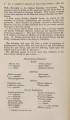
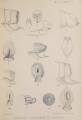
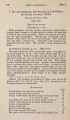
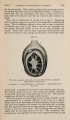
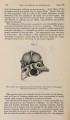
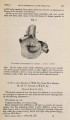
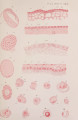
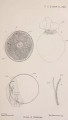
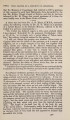
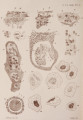
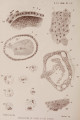
Show 506 MR. F. E. BEDDARD ON THE DEVELOPMENT AND [Dec. 7, from fishes which had been preserved entire in alcohol, and was unfortunately not in a very first-rate condition for microscopical investigation. I have been able, however, to make out the important fact that there is an essential similarity in the structure of the ovarian ova in both forms, and that in Geratodus, as in Protopterus, there are, besides the ova, certain other structures resembling ova in many particulars which have a different mode of development. The discovery of this fact in Ceratodus renders it practically impossible to suppose that the remarkable processes in the development of the germinal cells of Protopterus, described and figured by myself in this and my last paper, are in any way abnormal ; it had occurred to me before that there might be something abnormal. It cost me a great deal of labour, in the way of cutting sections, to ascertain that there was an actual resemblance between Ceratodus and Protopterus. In m y specimen of Protopterus I found it quite impossible to make a section of the ovary anywhere without discovering ova of both kinds in nearly equal abundance ; in Ceratodus, on the other hand (and this statement applies to two specimens), ova of the second kind were extremely rare ; I have cut literally hundreds of sections without coming across any evidence of the existence of two kinds of ova. This may be a real difference between the two genera, or may depend upon the season of the year at which the specimens were captured. In every case, however, the ovaries contained numerous mature ova, though the number of these latter was very much less than that of the immature ova. On the other hand, it is possible that there is really a difference in this respect between Protopterus and Ceratodus, wbich show other important anatomical differences. I have already contributed to the 'Zoologischer Anzeiger' (No. 236) a brief note of the principal facts contained in this paper. I have but little to add to m y former paper on the structure of the ordinary ova of Protopterus. In my last paper I drew attention to the curious specialization of the yolk in the adult ova ; in fig. 4 of plate xxviii. of that paper is illustrated an adult ovum which shows a differentiation of the yolk into two distinct layers, which are less distinguishable by their coloration or arrangement of yolk-particles than by the very definite break which separates them. Tbe outer layer of yolk forms a comparatively thin envelope, the greater portion of the ovum being occupied by the central mass of yolk. Van Bambeke " has recently noted and figured a similar condition of the ripe ovum in Gobius niger and other fishes, and PfluXer had previously referred to the same phenomenon in Mammalia. According to Van Bambeke, the distinction between the two zones occasionally disappears under the influence of reagents. Van Bambeke speaks of the line of division which separates the two zones as not being a membrane, but merely a condensation of the egg-protoplasm. With this opinion I fully agree : in the first place, the 1 Arch. d. Biol. t. iv. (1885). |