| OCR Text |
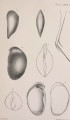
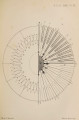
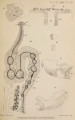
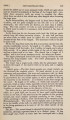
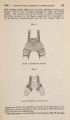
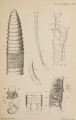
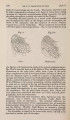
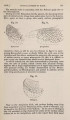
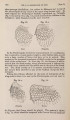
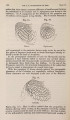
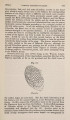
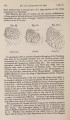
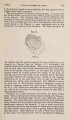
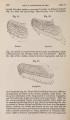
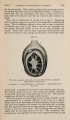
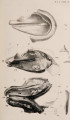
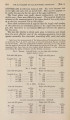
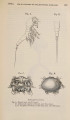
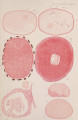
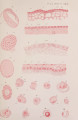
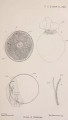
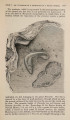
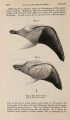
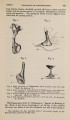
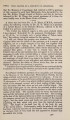
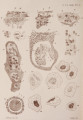
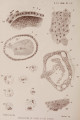
Show 134 MR. W. L. SCLATER ON A N E W [Feb. 1 6, The ectoderm of the tentacle (Plate XIII. fig. 6) also contains a series of nematocyst batteries; the cells, however, differ from those of the knob in the following points: they are very much smaller, they are pigmented, from them are developed the longitudinal muscle-fibres ; in the endoderm of the main part of the tentacle the elements are not nearly so high as are those of the knob, and at their bases are found the circular muscle-fibres. The tentacle therefore differs little in structure from the actinian type as described by Hertwig (7). The muscles are very well developed on both sides of the mesenteries ; the arrangement is shown in figures 8 and 9 of Plate XIV., where figure 8 represents the arrangement on the ectoccelic face, figure 9 the arrangement on the entoccelic face. The edge of the mesentery is occupied by a thick packed mass of mesenteric filaments above, and by the ova, also packed thick, below ; ova and mesenteric filaments seem to be well developed in all the mesenteries, except on the directives, where I have been unable to detect any sign of ova, but I have only been able to examine two directives, one of which was malformed, so that I am unable to make sure of this point. Plate XIII. fig. 7 represents a small portion of a section of a mesentery highly magnified, showing the folding of the surface on one side in order to increase the surface for the mustle-slips, but in no case have I detected the inclusion of masses of muscles in the mesoderm, as has been figured by Hertwig (7) in Actinolobia and Tealia, and other Actiniae. The only example of this Coral I have been able to examine contained ova ; no spermatozoa could be detected, so that the Coral may be considered dioecious. The development of the ova differs slightly from that described in the Actinians by Hertwig ; in Stephanotrochus the mesodermal lamella in which the ova lie is reduced to a thin string (Plate XIV. fig. 10), and the entodermal cells on either side have become very long and thin, resembling, perhaps, the " Cambium Zellen " described by Weissman in certain Hydroids which nourish the ova at their own expense. In the figure there will be seen several ovarian cells which have not yet entered the mesodermal lamella, but which are still lving in the endoderm ; and in one case there is an ovarian cell figured lying half in the endoderm and half in the mesodermal lamella ; the ripe ovum is full of deutoplasm, and the germinal vesicle and germinal spot are very clearly seen. Besides the ovarian string, the mesenteric filaments can be seen in section ( Plate XIV. fig. 10), consisting of a mesodermal string and high endodermal cells, with many pigment-cells scattered among them ; they are cut in section in different planes. Beyond the ova the mesoderm again thickens slightly up to the end of the mesentery, where it splits to line the hard septal Avails, since this section is from part of the mesentery low down where the mesentery is inserted between the columella and the two adjacent septa, all of which are lined by the mesodermal lamella with a layer of calycoblastic cells interposed. Calycoblastic cells were first detected by Heider (8), who showed |