| OCR Text |
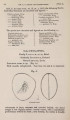
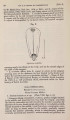
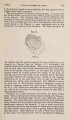
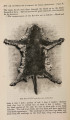
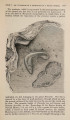
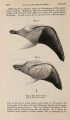
Show 386 MR, A. G. B U T L E R O N [June 29, tint, the abdomen grey instead of blackish, and the marginal spots the primaries smaller. 138. CH^EROTRICHE VITELLINA. Liparis vitellina, Kollar in Hiig. Kaschm. iv. 2, p. 471. n. 4 (1848). Euproctis gamma, Walker, Cat. Lep. ITet. vii. p. 1731 (1855). Artaxa princeps, Walker, I. c. Suppl. ii. p. 331 (1865). Murree, 7th and 9th August, 1885. 139. PORTHESIA XANTHORRHTEA. Liparis xanthorrhaea, Kollar in Hiigel's Kaschm. iv. 2, p. 470 (1842). d 2 , Campbellpore, 24th June, 1885. 140. PORTHETRIA OBFUSCATA. d . Lymantria obfuscata, Walker, Cat. Lep. Het., Suppl. ii. p. 367 (1865). d 2> 5th to 11th August, 1885. The female (which is a cripple) was sent to me, along with its eggs, some time ago ; it nearly resembles the female of P. japonica excepting that it is smaller. Some of the eggs were hatched about the beginning of May and, by my advice, were placed upon young hawthorn ; upon this and upon oak they have since lived, but their growth has, so far, been very slow ; at the present time (June 5th) they are in their second moult and measure 11 millim. in length. Dorsal surface slate-grey, with a central series of seven spots commencing on the fourth segment, the fifth of these spots ochreous, the others red; the spots are connected by a slender longitudinal pale line and are bounded on each side by black spots ; the subdorsal line is slender and whitish; the sides and ventral surface ash-grey; a lateral series of testaceous tubercles crowned with radiating bristles and connected by a very slender blackish line ; tubercles of the second and two last segments very prominent aud terminating in very long bristles; legs testaceous ; head dark testaceous, the eyes hounded internally by two large fusiform black spots. LASIOCAMPID^E. 141. TRABALA VISHNOU. Gastropacha vishnou, Lefebvre, Zool. Journ. iii. p. 207. d 2, Murree, 3rd September, 1885. " Cocoons very common all along the hills from Murree to Thundiani, August and beginning of September. The males all came out early in September, the females later; the latter appear to remaiti on their cocoons, as several were taken thus late in September. Cocoon and chrysalis sent."-/. W. Y. The cocoon of T. vishnou, which bears some resemblance to a quaint bearded face, is too well known to be worth redescribing here. |