| OCR Text |
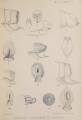
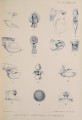
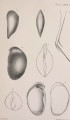
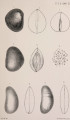
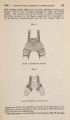
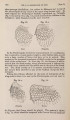
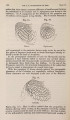
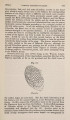
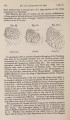
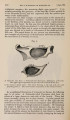
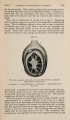
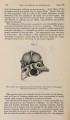
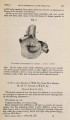
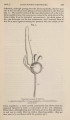
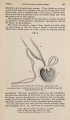
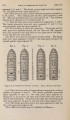
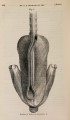
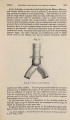
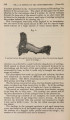
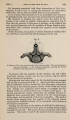
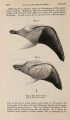
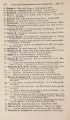
Show 1886.] MR. H. J. ELWES ON THE GENUS PARNASSIUS. 4 7 P. stubbendorfi ab 2 melanophia, Honrath, Berl. ent. Zeit. 1885, p. 274. This species appears to have been first discovered by Lehmann near Kansk in Central Siberia, and has since been found in Dahuria by Radde, and in many parts of the Amur region down to the coast by Christoph, Graeser, and others, where it appears to be abundant in many places, and flies from the 19 th of M a y to the end of June or later. On the island of Askold it is not rare, four males in m y collection from this place being larger than those from the Amur, and showing traces of the black patches on the cell of fore wing, which are conspicuous in mnemosyne. In Corea a form occurs which seems intermediate between this species and P. glacialis, but has not the yellow body of the latter ; and though I have seen no specimens from the western limit of its distribution, I should expect to find a similar transition to P. mnemosyne. Graeser, however, in Verh. Ver. Hamburg, 1879, p. 201, says that when all the specimens sent by Consul Luhdorf and Dorries from various parts of the A m u r are compared, he doubts the distinctness of this species from P. mnemosyne, as they show great variation in the amount and distinctness of the black markings, which sometimes are so distinct as to form a complete transition to P. mnemosyne. The pouch of the female is similar to that of the last-named species, and in five females in m y collection varies only in length, and is sometimes more produced behind than is usual in P. mnemosyne and generally darker in colour. P. GLACIALIS. Parnassius glacialis, Butler, Journ. Linn. Soc, Zool. ix. p. 50 (1866). IP. citrinarius, Motsch. Bull. Mosc. 1866, i. p. 189. This form, which appears to be found locally in some of the higher mountains of Japan, is undoubtedly very nearly allied to P. stubbendorfi. It differs from that species in its larger size and in the well-marked yellow hairs of the neck and breast, which in P. stubbendorfi and mnemosyne are found in the female only. The ground colour of the males is also of a much yellower tint than in P. stubbendorfi. The two females in m y collection, which are all that I have seen, have a blackish pouch resembling that of P. clodius in being considerably shorter than the pouch of P. mnemosyne or stubbendorfi. Mr. Pryer says of this species, in his Catalogue of the Lepido-ptera of Japan : - " I have taken this abundantly at Nikko in June and July, and received many from Yesso. It varies considerably in size, colour, and markings. I have eleven specimens in m y cabinet, no two of which are exactly alike. Yesso specimens are generally whiter than those from Nikko, from whence I have a specimen almost black. Some are without the dark patch on disk of fore wing, others have one and two patches, and a dark band on the outer margin of the fore wing, which sometimes extends to the hind wing. The female has sometimes a peculiar horny sheath attached to the underside of the abdomen." Mr. Strecker says he has re- |