| OCR Text |
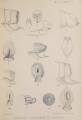
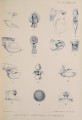
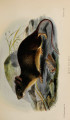
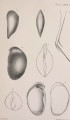
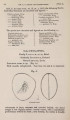
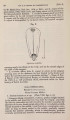
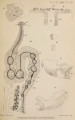
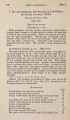
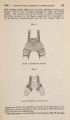
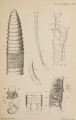
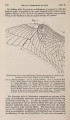
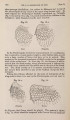
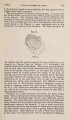
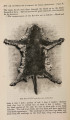
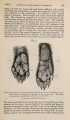
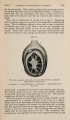
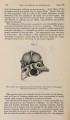
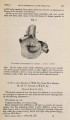
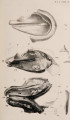
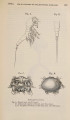
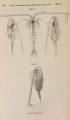
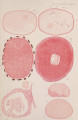
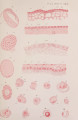
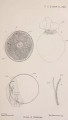
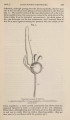
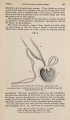
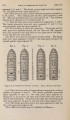
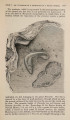
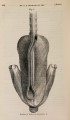
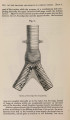
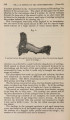
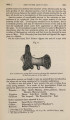
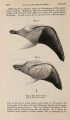
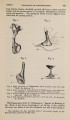
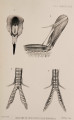
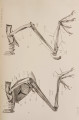
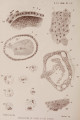
Show 488 DR. R. W. SHUFELDT ON [Nov. 16, consider how greatly the Gallinae differ among themselves in this part of their structure. So whatever affinities Geococcyx may have with this group, it is not evident in the form assumed by its trachea nor in the musculature of the lower larynx. Of the Tongue. M y memoir upon the skeleton of this bird contains an illustration of the hyoid arches as they are found in it (Journ. of Anat., Jan. 1886, pi. viii. fig. 8), and here it will be of interest to show the form of the tongue itself. It will be seen from the figure of this organ (Plate XLIII. fig. 1) that its tip is rounded, and that its anterior moiety is ensheathed in a horny theca of a jet-black colour; the posterior half, however, is soft and fleshy, with its lateral margins fringed with delicate fleshy spines of a pure white colour and directed backwards. From above downwards it is somewhat compressed, while its form as a whole is that of an isosceles triangle the base of which is rather less than one third of a side, and which exhibits a deep angular notch. The lateral margins of the superior larynx are smooth and sharp, while its hinder edge supports a spine-like fringe, very similar to the one found on the borders of the posterior moiety of the tongue. Immediately back of this we observe the large and capacious entrance to the gullet, a feature which I have also included in my illustration of the parts under consideration. The delicate, backward-extending limbs of the hyoidean apparatus curve up but very slightly behind the cranium in this Ground- Cuckoo. Of the Ossiculum lacrymo-palatinum. Careful search was made for this ossicle in m y specimen of Geococcyx, both orbits being included in the examination, but I am confident that no such bone is found in it. This bonelet was first described by Brandt, and is best seen in certain Albatrosses, and I have elsewhere described its location and appearance in Diomedea brachyura. According to Forbes, " it also occurs in forms so different from these as the Musophagidae, many Cuculidae, Chunga and Cariama, as well as in some Laridae and Alcidae, so that its presence is obviously of no particular taxonomic value" (Coll. M e m . p. 415). It was this account of its occurrence in certain Cuculidae that incited m e to search for it in our present subject, but, as I have said, it does not possess it. In birds where it exists it is represented, when thoroughly ossified, by a delicate styliform bar connecting the descending limb of the lacrymal bone with the upper surface of the palatine. Conclusions. By the aid of the researches of Garrod and Forbes into the |