| OCR Text |
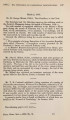
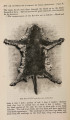
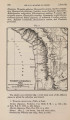
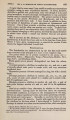
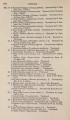
Show 226 MR. R. COLLETT ON HYBRID GROUSE. [Apr. 20, with certainty in our land, but it must surely be found if more carefully sought after" (' Vertebrata Fennica,' p. 164, Helsingfors, 1882). In Sweden several specimens have been captured, most of them in the northern counties (Helsingland, Jemtland, Norr- and Wester-botten), but a few as far south as Dalarne and Wermeland-as a rule amongst the mountain-ridges of the districts adjoining Norway. Dr. Kolthoff has informed me in a letter, dated Upsala, 7th March 1886, that, according to his knowledge, twelve specimens of this hybrid have been preserved in Sweden, of which the Upsala Museum possesses four (one male, three females). The Museum in Stockholm owns four, of which one is a female. Almost all were found, it may be said, accidentally, amongst the game which is forwarded during the winter from the northern counties to the towns for sale. Propagation in Norway. The first specimen preserved in any Norwegian collection was a male in winter plumage, forwarded from Roros in 1837 to the late Prof. Esmark. Until 1870, hardly more than half a dozen specimens were found or preserved in Norway, all of which were males obtained from the mountain districts in the southern part of the country (the provinces of Christianssand, Bergen, and Hamar) ; but during the years subsequent to 1870, 15 additional specimens have been obtained. Thus at least 22 specimens of this hybrid have been preserved in Norway during the last 50 years, among which only two were females. Almost all these have been obtained by the University at Christiania ; at present there are eleven specimens mounted (amongst which are the two females), one skeleton, and two skins. A few specimens have been sent abroad, and two are preserved in the museum of Bergen. Of these 22 specimens I have personally examined 13 in the flesh, having myself found some in the game-dealers' shops, while the others have during the last few years been presented to or bought for the museum. All the specimens were found in the southern districts of the country, with the exception of one, which was obtained in Saltdalen near Bodd, thus just within the Arctic Circle (65° N. lat.). The most southern specimen was caught in Sande, near the Christiania fjord (59° 35' N. lat.). The greater number of the preserved specimens, both in Norway and Sweden, have been in their winter plumage. One reason for this is that the greatest capture of the Tetraonidse takes place during the winter months, for during the summer they are protected by the game-laws ; and another is that the hybrids previous to the assumption of their winter plumage so nearly resemble the young males and the hens of the Tetrao tetrix that they are easily passed over unnoticed. In the winter, however, their plumage is so marked and peculiar, that this very seldom happens; but it is very probable that the greater number of individuals do not fall into the hands of naturalists. |