| OCR Text |
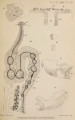
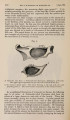
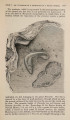
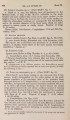
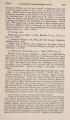
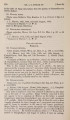
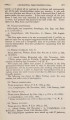
Show 1886.] LITTLE-KNOWN E A R T H W O R M S . 307 find no traces whatever of ova in the former body, and its walls comparatively thick and composed of muscular or perhaps connective- tissue fibres. These two series of facts are very decidedly opposed to the view that this body is really the ovary, and I have no doubt whatever that it corresponds to the receptaculum ovorum. In Lumbricus the receptaculum ovorum was correctly described by Hering, as Bergh has pointed out. More recently the structure has been figured by Dr. Horst1, who also quotes Hering's observations. I have myself observed an evidently similar structure attached to the oviduct of Acanthodrilus dissimilis. Dr. Bergh describes the origin of these bodies as being similar to that of the receptacula seminis ; they arise on the anterior wall of segment 13, and are at first independent of the oviducal funnels but subsequently unite with them. In Microchaeta these receptacula ovorum appear therefore more completely to retain their primitive position. It was obvious, however, from m y sections that there was a communication through the mesentery between the receptacula and the oviduct. The identification of the supposed ovaries with the receptacula ovorum confirms so far the accuracy of m y own determination of the oviducal funnel. I am bound to say, however, that a most searching examination of m y sections failed to bring to light any traces of the oviducal canal. I see that Mr. Benham has also failed to detect any connection between the funnel and the exterior. Assuming, at least for the present, that the supposed ovary is nothing more than a receptaculum ovorum, the true ovary remains to be identified. This I believe to be a glandular-looking body in segment 12, noted by Mr. Benham but overlooked by myself at the time when my paper was written. Mr. Benham describes and figures (loc. cit. pi. xvi. fig. 8) this gland as consisting of a " mass of rounded cells arranged in a band which is bent upon itself several times, the folds being close to one another." It is attached to the anterior septum of somite 12. In the specimen of this worm more recently dissected by myself, I have found a structure which must correspond to that described by Mr. Benham, though it occupies a slightly different position and is somewhat different in structure. This gland in my specimen was elongated and composed of a mass of rounded indifferent cells ; the anterior end of the gland was wider than the posterior extremity, which tapered gradually, and was attached to the anterior mesentery of segment 12; the main part of the gland lay along the ventral body-wall close to the nerve-cord. The reasons which lead me to suppose that this cellular mass represents an ovary in a state of functional inactivity are-first, that it occupies the right position ; secondly, that it corresponds exactly in structure to certain glandular bodies in Acanthodrilus dissimilis*, in which I have observed the occasional development of ova. 1 Tijdschr. d. Nederl. Dierk. Vereen. Deel iii. afl. i. p. 28. 2 P.'Z.S. 1885, p. 828, pi. Iii. fig. 9. |