| OCR Text |
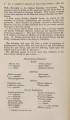
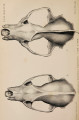
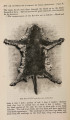
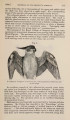
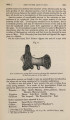
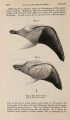
Show 268 MR. F. W. STYAN ON CERVULUS CRINIFRONS. [May 4, forehead, and slender build of the former, and the yellow head and black slits along the face of the latter. It is, however much larger than either, and apparently longer in the legs, compared with the size of body. Its fur is of a similar hard texture to that of Elaphodus michianus, but the colour is much richer and more glossy, lhe skull is attached to the skin, but I have not taken it out to examine. This species appears to be very rare ; ever since the description of it first appeared, the man I employed to hunt has been specially looking for it, but has only procured this single specimen. When I first gave him a description of it he was quite incredulous, and said no such animal was known, nor would he believe in it until he actually came across this one. " Last summer he procured for m e two young of the Elaphodus, which I am not aware have been described before. They are apparently not more than two or three weeks old, but are almost exact miniatures of the adult, similar in colour, with a very pronounced frontal tuft, but no pale eyebrow, ears marked with white as in adult. On each side of the back is a row of not very distinctly marked white spots, and outside that again just the faintest suspicion of another row. " I have also to record an interesting addition to the avifauna of China in the shape of Hirundo savignyi. Two birds, which I believe to be of this species, were killed at Pekin last October, one of which is now in the Shanghai Museum. David records having seen Swallows with reddish-yellow underparts in Upper Mongolia, which doubtless were of the same species, but no record of its occurrence in China exists. Both are males, one an immature bird, and measure respectively 7\ and 7 inches-the tail in the former being 4 inches, in the latter 3£, not fully developed. In the adult the forehead and throat are deep chestnut, the lower parts uniform rich chestnut-buff; the nuchal collar is broad and complete, but a little mixed with chestnut. In the younger bird the colour of the forehead and throat is similar to that of the lower parts in the adult, while its lower parts are again paler, a bright buff, and the nuchal collar is broken in the centre. " Whether H. savignyi is now admitted as a distinct species or is regarded as only a variety of H. rustica I do not know ; but if the latter, its range is remarkably wide, and it is strange to find it where the parent form is unknown and replaced by a distinct species, H. gutturalis. "I am, Sir, " Yours faithfully, " F. W . S T Y A N , F.Z.S. « p.S. A friend tells me that when in Pekin in 1883 he saw Swallows with uniform brick-red underparts, but did not obtain specimens. It is probable the species is not uncommon there." The following papers were read :- |