| OCR Text |
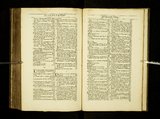
Show 0f the Motion of the Blood. 7+4 Book I I. ‘7‘." with fpirituous and volatil faline Particles in its Converfe with the vital Ventricle of the Heart. The Second end of the Motion of the Blood, is in order to the generation of nervous Liquor, and animal Spirits in the Cortex of the Brain. . Tubes of Arteries and Veins, aéted by various flefhy Fibres, as f0 many Machines, lellening the greater and fmaller Cavities of the Heart, and different Sangtiidiifls, whereby the refifiance of the Blood is countermanded by a firong Comptellion, and its Flux and Reflux are maintained to and from the Heart, to impart Life, Heat and Nourilhment to all parts of the Body. The Motion of the Blood, being a great infirument of the prefervation of Humane Nature is conligned to many ends. The produc‘tion of Blood, the generation of nervous Liquor and animal Spirits; the depu. ration of the Blood in various parts of the Body, and the formation of feminal Liquor in the Tefticles. ' "(mint-"d The Firl't and main end of the Motion of the Blood, is Sanguification, gggmfgfi which is produced by Chyle allimilated into Blood, as tnore and more mix~ zj‘fginsu‘m' ed with it in theHeart, Lungs, Arteries, and Veins. "miwd, Of the Motion of the Blood. Motion of the Blood toward the extremities of the Veins, and are not able to Promote it all along their lefs and greater Cavities, ending in the Right In fine, I cannot but admire and adore the infinite Wifdom of the Omnipotent Agent, who hath mechanically contrived the Motion ofthe Blood, by the great Apparatm of Organs, in giving a confiriétive' power to the great Blood-work of the Heart, and in feveral appendant Eifrndtaiilgfibn Book II: The manner how the Blood may be produced, is this; The Chyle being aflbciated with lymph: in the common Receptacle, is carried through the Thoracick Ducts into the fubclavian Veins, where it confederates with the Blood, and is tranlinitted with it through the Cat/a into the Right Auriclc, rand Ventricle of the Heart, wherein it is dafhed impetuoufly aoaini't .its Walls, by the {trong Conttaé'tions of flclhy Fibres, highly comprzgfling the Chyle (confufed with the Blood) and breaking it into fmall Particles and then the Chyle fomewliat mingled with the Blood, is carried througli the greater Trunk, and finaller and? finaller Branches, ries, where the Chyle receiveth a greater CommiiiUtion,and capillary Artewhich is made by a great Compreflion, by reafon in infpiration, free draughts of Air are received into the Bronchia and Appendant Veficles, whereby they bein much, dilated do Coniprefs the Sanguiduéls,and breakthe Chyle (confederate?! with the Blood into fmaller Particles; then in the Right Chamber of the Heart, and in expiration, the Diaphragme being brought from a Plain to an Arch, and the Ribs from Rig t to more obtu-fe Angles do prels down the Lungs, whereby the cavities of the greater and finaller pulmonary Veffels are narrowed, and the Chyle being in conjunfiion with the Blood isf ue‘ezed into iinall Particles, as protruded fil'fl: through the finall Terttiinailions of the capillary Arteries, and {iraight Interi'cices of more minute Origens of the pulmonary the Veffcls, and throu h the capillary Veins Brancheg and greater Trunk, into the Left Auricle and Ventricle of the Heart‘ wherein the Chyle being more embodied with the Blood. is farther beaien as b al'eftle into many minute Atomes, againft the fides of the Left Vdntriclye' oftheHeart; and from thence the Chyle ried through the numerous Divarications mingled with the Blood is car and minute extremities'of At: 5:35 and Vems, wherein by their innumerable circular Fibres the meg (initbcellslgbhd grzztxizipnd greater comminution, till it is perfectly affimi. 3‘ . . g many Circmts in an hour through the Heart Lungs, Arteries, Veins, in which the Chyle in its progrefs \ tith the Blood, is more and more exalted by the ela‘i'tick Atomes ofVAir in theLungs, and with Liquor, till the Chyine receiveth its ultimate Difpofition and Form. The nobler part of the vital Liquor is impelledout of the common Trunk The l‘ctund and of the Motion uf'tht Blood. ‘of the Aorta into its afcendent Trunk, and from thence carried through the internal , greater and lefs Carotide Arteries, palling through the Membranes, and inferred into the Cortical Glands ofthe Brain, wherein the more delicate, the albuminous part of the Blood is feparated from the Red cralfament, and turned into animal Liquor, infpired with exalted‘Spitits, as its more choice and refined Particles. The Third end of the Motion of the Blood is its refinement from its Re- crements, in its palfage through the Interl'rices of the Veifels or Glands, lodged in the lVIiilcles, Vifcer‘a, and ‘Cutir. The mafs of Blood confifteth of two Eifential parts, the Red Craffame'nt, and albuminous Juyce, aflociated with Lymphatick, Bilious, and potulent Liquor, which are fecerned from it by its motion through matiy difl'erent Glands, as fo many Colatories, feared in different parts of the The Third end of the Motion of the Blood. The conllitu‘ cnr parts of Blood. Body. The Blood being impelled by many branches of Arteries, into thefub~ fiance of the Lungs, and the minute Glands of'the Mufcles, Spleen, Liver, wherein the Blood and Motion hath its Lympha, fecerned from its nobler Liquor, and conveyed into the Lymphardufis of. the parts (‘feated below the Diaphragma) into the common Receptacle, and into‘the Lymphzduéts ‘of thofe above, into the fubclavian Veins. The vital Liquor is tranfmitted out of the Left Ventricles of the Heart through the common, and defcendent Trunk of the Aorta, and thence through the Cazliack Artery into the Stomack, and Spleen, and through the upper and lower 'Mefenterick Arteries into the Intel'tines; afterward the Blood 'is re-conve-yed from'thc Stomaclt, Spleen, and Guts, by feveral branches of the 'Pom , and common Trunk, into the fubf'tance of the Glands of the Lihiliouz ver, wherein the more thin bilious Particles of the Blood, paliing through The Recremtnts of the Blood; the [nterflices of the VelTels, is received into the Origens of the excretory are {mm 'Ducts and Trunk, relating to the Vcfic‘ula felled, into its more enlarged Ca- from it in the Liver. vity. And the more gro‘fs parts of Bile, are fevered from the Blood in the empty fpaces of the 'hepatick 'Glands, and entertained into the excretory Veilels, leading to the rPerm Bilarim, and from thence by a Trunk into the termination of the ‘Duodemtm, or beginning of the jejunum. Another fetous and 'faline watry Excrement, is thrown off from the Blood in the Kidneys, in whofe Glands the vital I iquor is depurated by Motidn, as being carried out of the defcendent Trunk ofthe Aorta, into the emulgent Arteries (inferred into the Kidneys ,through whofe terminations,the Blood paf- The warty parts of the Blood, are feccrned from it in the Kide ncys. fing into the empty fpaces of the VelTels, is fevered fromits potulent Recrem‘ents,which are tranfmitted through the Urinary Ducts, into the Pele/is. And Laflly, the Blood is defaecated from its ferous Recrements, by its motion from the Center to the circumference from the Heart,and greater Trunks of Arteries, into finaller and fmaller branches till the Blood be tranfmitted b the Capillarys, into the ambient parts ofthe Body, into the fubfiance of the cutaneous Glands, wherein the warty faeculencies and fireams of the Blood are fevered from the more refined Particles, and received into the excretory Duéts ofthe Skin, a‘rid thrown of? by Sweat and Tranfpiration. V The watry Recrement: arealf‘u rep}: rated from the Blood in C H A P. the cutaneon Gland |