| OCR Text |
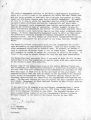
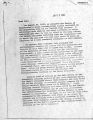
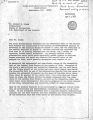
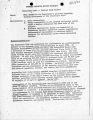
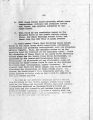
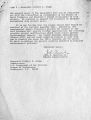
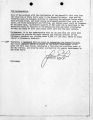
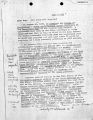
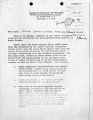
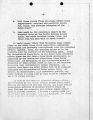
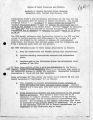
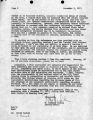
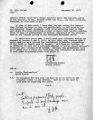
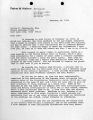
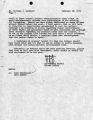
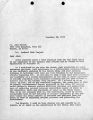
Show Mr. Curtis Oberhansly February 5, 1974 Page 2 matters and possible wildlife habitat elimination. You might also explore here efforta_tli^_jdLtni^ss__^ made to obtain^ minimum flows from the Bureau of Reclamation and the ulfe£ulnl=rsFs~15irBu^ promises in this regard. The third major area would appear to me to be the further de-watering to the fullest extent the witness knows of the rest of the streams flowing south from the Uintas by means of the Uintah h and Ute Indian Units of CUP. Again, minimum flows stuff would be relevant. ! ;' Obviously the environmental impact statement makes a good reference throughout the deposition of these people. Obviously, we should use whatever documents we have on the witness or documents the witness referrs us to. The question of a subpoena duces tecum v Av seems to me to be an open one. Since these people were not part of the decision-making process, their documents carry less impact obviously than Assistant Secretary Reed's in many respects. In addition, most of what they have done we probably already have, and what we don't have we can no doubt discover from the witnesses oral testimony. Then, upon such identification, we can go get those documents at our leisure. Obviously, however, we can slap a subpoena duces tecum on them and it if raises a fuss, just forget about the thing. However, I would like to keep the cost of these depositions to a bare minimum-I am thinking of deposing, say, two, or at the most, three, of the poeple we would eventually want to call and having the examination last only one day at the most. In short, when we have to watch our funds, I generally try to pick those areas where all-out expenditure is probably not necessary. This would seem to be such an area. At any rate, use your best judgment. Our objectives would be with these witnesses first irreparability (detrimental environmental impacts), and second the massiveness of the environmental impact over such a large geographical area. On the latter point, we must constantly keep in mind that Interior is reevaluating the rest of the Bonneville Unit and the Ute Indian Unit, if not also the Uintah Unit. The Secretary has stated that one of the purposes of this is to resolve the minimal flow problems. Thus, ^-we want to avoid getting sandbagged. Therefore, I think jwe__wan^Jto / only establish the de-watering over this large geographical region, / the extent of Utah's^"high:rclass fishery so afrectej, general impacts V. onotHer wildlife, and mit^atiojn__fac tors which could be used,, to wit, ) minimum flows^ selectivrty~bT^treams~To~T>e inundated or divertedT" / moving cliversion points and reservoirs to lower elevations, etc. ( I think we wish to avoid argument on specific streams and argument I as to specific flow numbers, keeping all of this stuff rather general. |