| OCR Text |
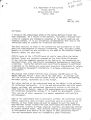
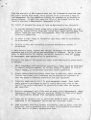
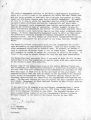
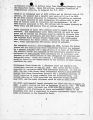
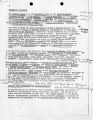
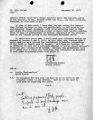
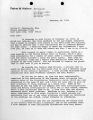
Show Faxogram - 5 The Central Utah Project would provide for a joint development in the Uinta Basin. to provide water for Indians as well as non-Indians. In any event it will not be the'Indian in the final analysis that will be denied his water rights. Of course there are problems, but they are not unsolvable. The Indians have water right claims under the Winters Doctrine for 29,118 acres of unirrigated lands. Of this amount only 15,2*42 acres are actually deferred in connection with the Bonneville Unit. As a very minimum, a single-purpose development such as the Leland Bench Area could make an equivalent water supply available to meet the deferred requirement at no greater cost than a unilateral development from Rock Creek and Duchesne River as would have been required in the first place. The conditionally authorized Uintah Unit provides a water supply for 7,8l8 of the remaining 13,876 acres of unirrigated land of-concern to the Indians. Thus only 6,058 acres remain to receive a water supply. If the Ute Indian ^nit fails to materialize, the authorized Upalco Unit could be converted to serve this acreage. Investigations of the Ute Indian Unit are in full swing to scale and scope a development within water determined to be available by Utah. In this regard, 30,000 acre-feet of depletion for the Uintah Unit, 10,000 acre-feet for the Upalco Unit, and 50,000 acre-feet for other deferred Indian purposes have been reserved as committed uses. In addition, the 102,000 acre-feet of depletion at Kaiparowits (water right subject to Central Utah Project callback beginning in year 2010) and a remaining 107,000 acre-feet of uncommitted depletion, based on 5-8 million acre-feet available to the Upper Basin and joint responsibility for the Mexican Treaty, combine for a total of 299,000 acre-feet of potential depletion to be equated against development within the Uinta Basin. It is realized that there are competing uses for this same water, such as domestic, agriculture,'recreation, power generation, and other industrial uses. Some of the factors which will affect the determination of the amount of that water available for the various uses are (a) priority of water right, (b) the amount of water available in tributaries within transportation range of the potential uses, (c) the nature of ..the decreed use, (d) the extent of domestic and agricultural demands, and (e) the relative time of development of oil shale and competing industrial. uses. ; .A;- •.',.•;:. *j?% • Additional water would be made available for oil shale development by purchasing water rights from those presently using water for other purposes, and if the use category is changed from some of the future commitments. The Colorado River Basin Project Act (Public Law 90-537,.September 30, 1968) recognized the need for augmenting the water supply of the Colorado River. Under Title II, Section 202, the Congress declared that the satisfaction of the requirements of the Mexican Water Treaty from the Colorado River constituted a national obligation. .A:.--.;. Augmentatiorrpf the Colorado River Basin water supplies could be by importation from other basins, desalinization, geothermal sources, or weather modification. Faxogram - 5 |