| Title |
Correspondence on Bonneville Unit of Central Utah Project |
| Description |
Correspondence regarding the Bonneville Unit of the Central Utah Project; from the The Dorothy Harvey papers (1902-2005), a collection of materials focusing on the Central Utah Project (CUP), a water resource development program to use Utah's alloted share of the Colorado River. Includes correspondence, federal documents, project litigation materials. |
| Subject |
Central Utah Project. Bonneville Unit; Colorado River Storage Project (U.S.); Ute Indians--Claims; Water resources development--Environmental aspects--Utah; Natural resources--Environmental aspects--Utah; Natural resources--Management--Utah; Strawberry Aqueduct |
| Contributor |
Dominy, Floyd E.; Crow, John O.; Raskin, David C.; McConkie, A. R.; Hayes, Lillian; Hamre, Vern; Ruckel, H. Anthony; Zeller, Henry M.; Black, Kenneth E.; McGuire, John R.; Quarles, John R.; Reed, Nathaniel P.; Lynn, Laurence E.; Jellinek, Steven; Oberhansly, Curtis K.; Horton, Jack O.; Leshy, John D.; McComb, John |
| Additional Information |
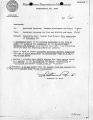
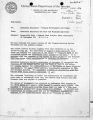
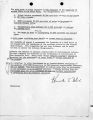
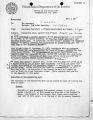
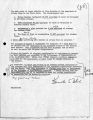
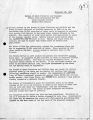
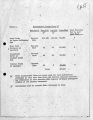
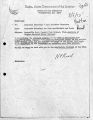
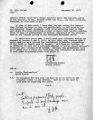
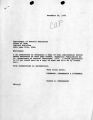
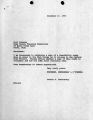
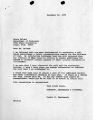
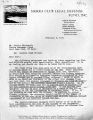
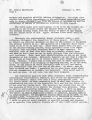
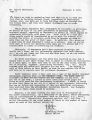
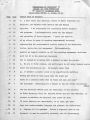
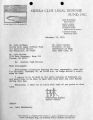
Includes: Memo on agreement between the Ute Indian Tribe, Central Utah Water Conservancy District, Bureau of Indian Affairs, and Bureau of Reclamation on deferment of development of Indian lands for irrigation, and other matters; Letters from the Sierra Club, Forest Service, Fish and Wildlife Service, Natural Resources Defense Council; Memos describing government principles and standards for evaluating water projects; Program Decision Option Document, Bonneville Unit - Central Utah Project; Letters between Sierra Club Legal Defense Fund and Curtis Oberhansly regarding Sierra Club, et al. v. Stamm, et al.; Corrections on Transcript of January 30, 1974 Deposition of Assistant Secretary Reed in case of Sierra Club, et al. v. Stamm, et al.; Statement of John McComb in United States District Court for the District of Utah case: Sierra Club, a non-profit California corporation, et al., Plaintiffs, vs. Gilbert Stamm, individually and as Commissioner, U. S. Bureau of Reclamation, et al., Defendants |
| Spatial Coverage |
Uintah and Ouray Indian Reservation (Utah); Duchesne River (Utah); Uinta River (Utah); Duchesne (Utah); Colorado River Watershed (Colo.-Mexico); Uinta Mountains (Utah and Wyo.); Green River (Wyo.-Utah); Ashley National Forest (Utah and Wyo.); Uinta National Forest (Utah); Wasatch National Forest (Utah and Wyo.); Salt Lake City (Utah); Strawberry Reservoir (Utah); Utah Lake (Utah); Jordanelle Reservoir (Utah); Provo River (Utah) |
| Collection Number and Name |
Accn2232 Bx118 Fd1; Dorothy Harvey papers |
| Rights Management |
Digital Image © 2010 University of Utah. All Rights Reserved. |
| Holding Institution |
J. Willard Marriott Library, University of Utah |
| Date |
1965; 1972; 1973; 1974 |
| Digitization Specifications |
Original scanned on Epson Expression 10000 XL and saved as 400 ppi TIFF. Display image generated in Contentdm. |
| Publisher |
Digitized by J. Willard Marriott Library, University of Utah |
| Type |
Text |
| ARK |
ark:/87278/s6n58kbp |
| Setname |
wwdl_neh |
| ID |
1155193 |
| Reference URL |
https://collections.lib.utah.edu/ark:/87278/s6n58kbp |
| Title |
Page 39 |
| Setname |
wwdl_neh |
| ID |
1155033 |
| OCR Text |
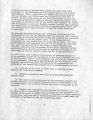
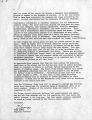
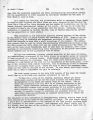
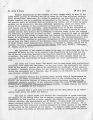
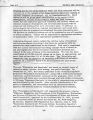
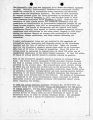
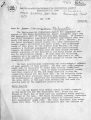
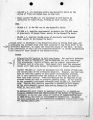
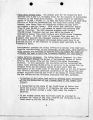
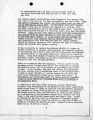
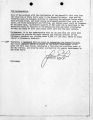
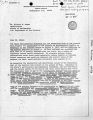
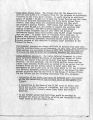
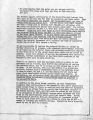
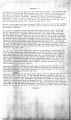
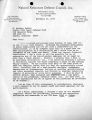
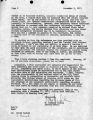
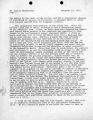
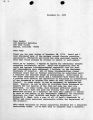
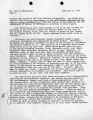
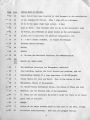
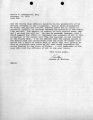
Show * Mr David G Hanna (2) 30 July 1973 use, than the massively expensive and often environmentally destructive schemes for the augmentation of water supplies by interbasin transfer and the like, a-bout which we hear so much. As a medium for obtaining the coordination which is necessary, steps should be taken to knit together the basin plans now being prepared by the EIA with the State Wat^r Plan of the State Engineer and the Bureau of Reclamation, and the Rio Grande Regional Environmental Project of the Bureau. Hot any one of these will be worth a tinker's dam unless compatible with the others. (Actually, such coordination is required by Section 131.204, Code of Federal Regulations, governing the preparation of basin plans.) Very important is the continuous planning process requires of the states by the Federal '.fater Pollution Control Act Amendments of 1972. There is now not a sufficient body of knowledge and experience available to prepare basin plans which are adequate to more than a small percentage of the optimum. The continuous process must be used to obtain ever-increasing effectiveness in basin plans. For this reason the State Vfater Plan and any plans developed under the RGHEP, as well as the basin plans themselves, must be kept open and flexible, with a full spectrum of alternatives continually under examination to facilitate intelligent choice between them at the appropriate time or times. To make the continuous planning process operative in the sense of producing ever-evolving improvement of the basin plans, an energetic system of research is very important as a primary backup. Evolutionary improvement must be led by .~. -:_.„ .:~-.~,~„,-.-v~ A* •-n.-.t.rift^r.a fpjrno ±h<n •^t.Pj.+.p. Water Resources Research In- stitute is a key member of the team for the improvement of the basin plans. Looking at the situation from another direction, lack of knowledge is not en adequate excuse for inadequate basin plans. There are ways to obtain the necessary knowledge and they must be utilized to the fullest. In some cases, intelligent inferences can be used to compensate for gaps in knowledge. The most cogent passage in the July 1972 version of the Lower Hio Grande Basin Plan is to be found (see previous reference) on Page 63: "Uxilike other areas of the country, municipal sewage and industrial point sources are not now the major concerns for water quality management in the lower Bio Grande Basin of Hew Mexico* ITor is there any indication that they will be of primary importance in the future. Future abatement policies and water quality management in the basin will address four general problems: l) the surface - ground water relation and the changes connected with a diminishing surface supply? 2) possible changes in water-use and attendant effects; 3) agricultural water-use practices; 4) adequate surveillance of stream and ground-water quality." The remainder of this sub-section is disappointing, however, because there is no real development of the ideas of the lead-off paragraph. The plan should devote a great deal of consideration to the analysis of the four general problems which are mentioned in the quoted passage. Such analysis will almost surely lead to tAe finding that the crux of the problems of the Lower Hio Grande Basin lies in the lap of agriculture. |
| Reference URL |
https://collections.lib.utah.edu/ark:/87278/s6n58kbp/1155033 |