| OCR Text |
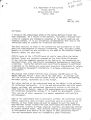
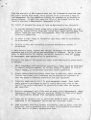
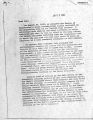
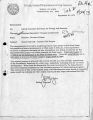
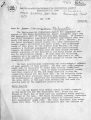
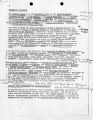
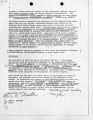
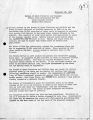
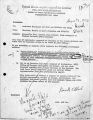
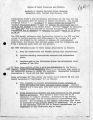
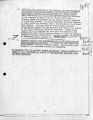
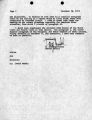
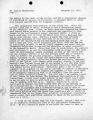
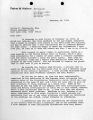
Show CUP MEMO II October 17, 1973 of To understand, if such be possible, the trans-basin diversion 136,600 acre feet, reference to some geographic and geological facts is necessary. The Uintah Mountain Range runs in an east-west direction from the Green River 150 miles west to the Wasatch Range. The Uintahs are the climax feature of the Uintah Primitive Area of the National Forest Service. This primitive area, the largest and finest mountain wilderness in Utah, is currently in the post-hearing Wilderness Act review stage, ie, the ball is in Congress s Court for eventual determination of the size of the Uintah Wilderness. The drainage south from this 150 mile range feeds the Strawberry and Duchesne Rivers. A great number of streams tributary thereto flow almost directly south into these drainages and thence to the Green River. Basic to the construction of the Bonneville Unit, the transfer of 136,600 acre feet of water annually from the Colorado River Basin to the Bonneville Basin, and, in fact, basic to any conception of the Central Utah Project, Is the Indian Deferral Agreement of September 20, 1965. The Uintah-Ouray Reservation of the Ute Indian tribe is located in the Strawberry-Duchesne River valleys. By virtue of the legal theories and holdings of Winters v. United States, 207 U.S. 564, 52 L.Ed. 340 (1908), Skeen v. united States, 273 Fed. 93_ (9th Cir. 1921), and Arizona v. California, 3/3 U.S. 546, 10 L.ha.zc 542 (1963), the Ute Indians have a claim to Colorado River water which must be honored. Although it appears that argument still exists regarding the extent of this claim, the Indian Deierral Agreement among the Ute Indian Tribe, the Central Utah Water Conservancy District, and the United States, acting through the Bureau of-Indian Affairs and the Bureau of Reclamation, definitely recognizes that^ for the Central Utah Project the Indians defer their right to irrigate 36 450 acres on the Reservation so that the Central Utah Project may be'constructed. In return, the Indians are assured that their water must be replaced no later than January 1, 2005. The execution o£ this agreement enabled plans for the Bonneville Unit to mature to their present state. The particulars of the entire Bonneville Unit are (1) diversion of 136,600 acre feet to the Bonneville Basin, of which 9600 acre < feet goes to Utah Lake, 9000 acre feet goes for municipal and industry use in Juab and Utah counties, and 118,000 acre feet goes for supplemental and new irrigation in the Utah, Juab and Sevier valleys or basins in the Bonneville Basin; (2) diking of Utah Lake, which cuts off Goshen and Provo bays by dikes, increases available water lor "useful" disposition of 105,000 acre feet, of which 22,000 acre i.eet is to be used to farm diked off Provo Bay and 99,000 acre ieet for municipal and industrial use in Salt Lake City area made available through exchange with Jordanelle Reservoir, being built upstream^ from Utah Lake on the Provo River; (3) calculation that overall in the -2- |