| OCR Text |
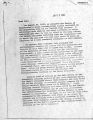
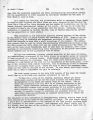
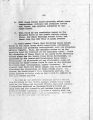
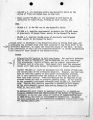
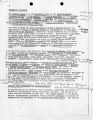
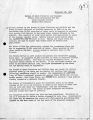
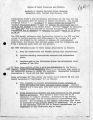
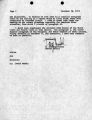
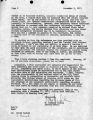
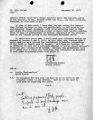
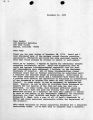
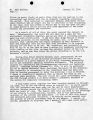
Show 0 o CUP MEMO II October 17, 1973 by a date certain, we have additional legal authority for requiring an EIS on the entire project prior to commencing construction on the initial phase. Also pertinent are the Council on Environmental Quality Guidelines, 36 Fed.Reg. -7724 (April 23, 1971), sections 5(a)(i), recommendations or reports related to the legislation, (ii; projects and continuing activities, Sec. 5(b) major federal actions, eg, cumulative impact of action proposed and further actions ^ contemplated, decisions about partial aspects of a major action, etc. *" Environmental Impact Statement The Central Utah Project Bonneville Unit Final Environmental Statement, dated August 2, 1973, is a deceptive document. The statement is impressive in length, 702 pages of text, 163 pages of appendices, and a 579 page "Appendix A--Review Comments" which .incorporates many of the comments received on the draft EIS. Environmental and ecological inventories and perceived environmental impacts concerning the.Bonneville Unit itself are impressive and quite likely invulnerable to legal attack. Despite this apparently strong effort, analysis reveals that a very substantial portion of the Bonneville Unit has already been built: (1) Jordanelle Reservoir is almost completed; (2) Strawberry Reservoir enlargement and Soldier Creek dam have been completed and impoundment is now beginning; and (3) Starvation Reservoir is apparently built and operating. Thus, to that extent, the EIS is largely of historical interest for those facets of the Unit. Although this leaves the Upper Stillwater Reservoir on Rock Creek, the many diversions from creeks and streams westwardly therefrom to Strawberry Reservoir, the Current Creek Reservoir, the aqueduct system, and the entire Utah Lake affair as remaining proposed parts of the Unit, the future Upalco, Uintah, and Ute Indian units acquire increased importance and relative size so far as remaining federal actions planned for development. The EIS manages to take only a pass at these other units, and this pass is in the nature of brief description of the units, recognition that there will be environmental impacts, and assertion that such impacts will be investigated in detail at a later date as they move closer to the development stage. ' In short, the additional units of the CUP are recognized as the natural and foreseeable sequel to the Bonneville Unit, but they are only briefly described in the descriptive part of the EIS. In the analysis sections of the EIS and in the discussion of alternatives they are given very short shrift or are " The new CEQ Guidelines filed July 31, 1973, in all likelihood strengthen existing authorities' endorsing inclusion of all CUP units in a final EIS; the publishing of the Final EIS two days subsequent to these new Guidelines, however, may make"their applicability questionable. -5- |