| OCR Text |
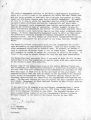
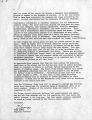
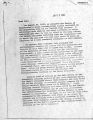
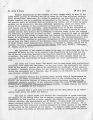
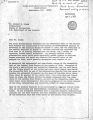
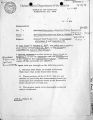
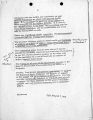
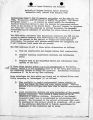
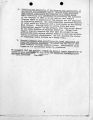
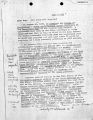
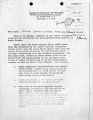
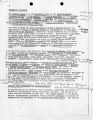
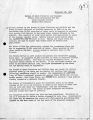
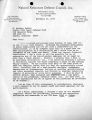
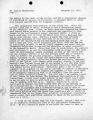
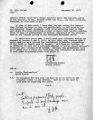
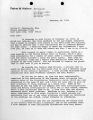
Show p Mr David G Hanna (3) 30 July 1973 In mentioning agriculture I include both irrigated and dry-crop farming arid livestock culture on the ranch and in the feedlot to the extent that each exists in the Lower Rio Grande Basin. According to my understanding, salinity and sedimentation are perhaps the most serious pollution problems in New Mexico, and the Lower Rio Grande Basin is certainly no exception. Agriculture plays a major role in making this true. This is not to say that these problems are not seri- . ous enough naturally in the waters of the state, but there is a significant difference between the virgin conditions and those that now exist subsequent to and concurrent with the activities of modern man. (Recommended reference: Arid Lands Resource Information Paper L'o 1 - Salinity iroblems in Arid Lands Irrigation: A Literature Review and Selected Bibliography, by Hugh E Casey, published by the Office of Arid Lands Studies, University of Arizona, Tucson, AZ 85719> 1972.) Parenthetically, I would like to suggest that a more lucid and complete tabulation of water quality measurements, accompanied by a verbal explanation and comparison with current water quality standards, would be a great help to the reader of a basin report, particularly a non-chemist. Abbreviations, such as "TOC" and "TOD" should be written out at least once, somewhere. The information presented in the Lower Rio Grande Basin Report is not either lucid or complete, unless I am mistaken. Notwithstanding the rather obvious effect of agricultural activities on the quality of water on the surface and underground, it seems that the State a-gencies have been loath to take any action to improve the situation. Originally, this hesitancy was undoubtedly due to the political influence of agriculture, but since the implementation of the one-man one-vote decision of the Supreme Court this influence is no longer disproportionately great, nor is agriculture as important to the economy of the State as it once was. I believe that investigation and analysis will show that the relative position of agriculture, present and future, in the economy of the State is about the same.as it is in Arizona, where it has been shown that its importance is not overriding. It uses water out of all proportion to its value to the economy, and is the cause of the cries of shortage. In terms of objective economics, it has been shown that there is no actual water shortage in Arizona, but merely a failure of State institutions to provide for the efficient allocation of existing supplies. The key to efficient allocation is an institutional system which allows great flexibility in the transfer of water rights between uses and location of use. (Recommended reference: Water Sue plies and Economic Growth in an Arid Environment - An Arizona Case Study, by Maurice ... Kelso, William E martin, and Lawrence EAMaek, the University of Arizona Press, 1973, 38.50.) The conclusions of this book show without doubt that there is no reason whatever for any disproportionate emphasis to be placed on the value of agriculture, either in seeking new water supplies or in exemptions from necessary features of water management in terms either of supply or quality. One point of personal o-pinion I'd like to adu to the conclusions of the book is that the management of water quality is more important in Lew Alexico than in Arizona due to natural con-diwions. It is very important in t..e maintenance of the usefulness and reuse of the available supply. |