| OCR Text |
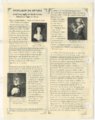
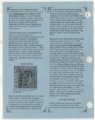
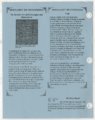
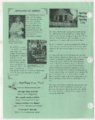
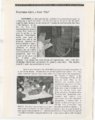
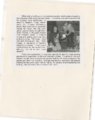
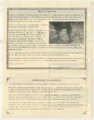
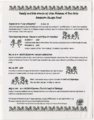
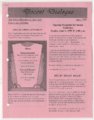
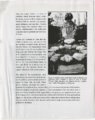
Show rSPOTLIGHT ON EXHIBITIO~ On March 27 a special exhibition on New Loans of Asmat Art from the collection of Steven Chiaramonte will open in Gallery Three. r E : ' n being. The fruit of the tree is identif~ ;i~h~he skull and, thus, ev.ery black fruit-ea~~:g bird is a headhunter. ~,1 Central to religion belief is the figure of Fumeripits, the Great Headhu~ter. According to one story, Fumeripits drowned in the estuary of the Surets River while on one of his journeys. His body was carried to sea where it washed up on a sandbank. War, the white tailed eagle, was able to bring him back to life by pressing smoldering pieces of wood against various parts of his body. The reborn Fumeripits built a great ceremonial house and carved a large number of wooden figures of men and women to fill the house. When he finished he began to drum whereupon all the wooden figures gradually came to life. This story explains the high regard given to woodcarvers for in his hands the wood takes shape and comes to life. Who Are the Asmat? The Asmat people inhabit a region situated on the south west coast of New Guinea. Typically, the Asmat area live in villages with an average of 400 inhabitants per village. Villages are usually located on the coast or near the banks of the many rivers that feed into the Arafura Sea. The heart of each village is the men's house or "yeu" which is the religious and social core of a village. There can be from one to three men's houses per village. Traditionally, most men spend the greater part of their days in the men's house. Unmarried men and boys are expected to live there and all ceremonial objects are stored there. Most importantly, the "yeu" is where the boys are trained to become fullfledged members of their community; it is in the men's house that they listen to the myths of Fumeripits, the Great Headhunter, of Ats, the Trickster and the other great heroes, that they learn the sacred songs and the ceremonies to which they belong, that they hear discussions about village politics. Within each "yeu" are several hearths, membership in which is determined by patrilineal inheritance. One of the four posts of a hearth is called "bis" and is given the name of an ancestor. The dead members are usually buried in front of the men's house and the ancestors are constantly present within the house. The "yeu" is both the profane and sacred cen~r of a community composed of the living and the dead. L SPECIAL TRAINING SESSIONS Chuck Loving will present a special training session on his new installation of African objects on March 26 at 1:00 p.m. and Steven Chiaramonte will present a special training session on Asmat Art for all docents at 2:00 p.m. The forest provides the main source of food; the sago palm. The palm also provides wood for the fires, houses, hunting weapons of bows, arrows and spears and for the canoes and paddles without which this swampy river region could not be traveled or exploited Lacking stone, ~ood is the raw material of existence and for the at the human being is a tree, the tree a ~ J TRAINING FOR IMAGES AND WORDS Training for the classroom Presentations for Images and Words will be on Thursday, March 5 at 1:00 p.m. Any docent who is interested in participating should plan to attend. If you would like to do classroom presentations for this high school program but can't attend the March 5th training give Virginia a call at 581-3580. |