| OCR Text |
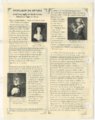
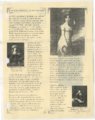
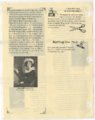
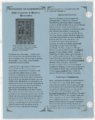
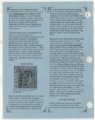
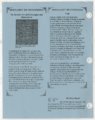
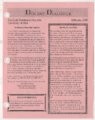
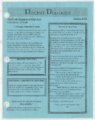
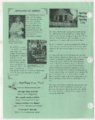
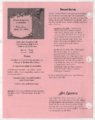
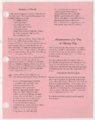
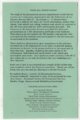
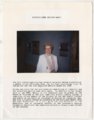
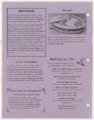
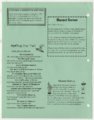
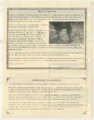
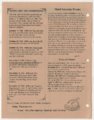
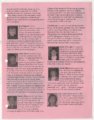
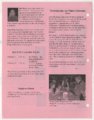
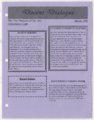
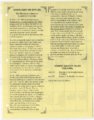
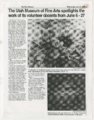
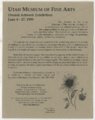
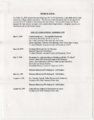
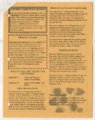
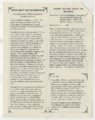
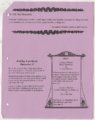
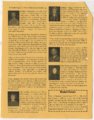
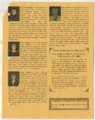
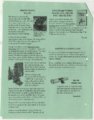
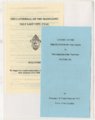
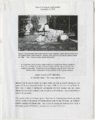
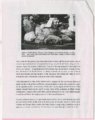
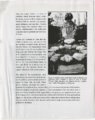
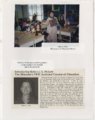
Show r SPOT.LIGHT ON A~TIS~S= i Brief B10graphy of Mane Lomse Elisabeth Vigee Le Brun Marie Louise Elisabeth Vigee was born 16 April 1755 in Paris, the daughter of portraiti t Lou ise Vigee and his wife Jean Maiss in , a hairdresser. On ly 3 months old, Elisabeth was sent to a ·mal l farm near Epernon, and cared for by a peasant woman unti I, at the age of five, her pare nts enrol Jed her in the Couvent de la Self-Port;~'k 1790. Trinite. After 7 years, she Oil on canvas. returned to her parents in Kimbell Art Museum Paris and was allowed to attend drawing classes under her father. She was able to spend only a few months with him before his death (9 May 1767). She continued to pursue drawing and painting by copying paintings in private collection and painting portraits of family members, learning her skills without apprenticing to a master. Within three years she was painting portraits professionally. After her studio was seized for practicing without a license, she applied to the Academie de Saint Luc, exhibited works in their Salon , and wa. instal led as a member on 25 October 1774. The following year, her step father retired and moved the fan1ily to an apartment in the home of Jean Bapti.-te Pierre Le Brun, a painter and art dealer. Portrait of Ma·r~c-Antoind'~~c. On 11 January 1776. Queen of France, c. 1788 . Elisabeth married Oil on can,·as. c"" Orleans Jean Baptiste . Museum of Art. J Elisab_eth ~igcc Le Brun frequently painted the porlra,ts ot royalty and was summoned to ~ Versai ll es in 1778 to pai nt the Queen M a r i e ~ Antoi nette. Her on ly daughter, Ju lie, was born 12 February 1780. In l 78 1 she toured Flanders and ( Hol land with her husband. The works of Rubens and other Flemish masters inspired her to try new techniques such as painting on wooden panel rather than canvas and using thin coats of paint to create effects Juli e Vigee Le Brun, 1787. of luminosity and depth. Her Se! fOil on pane l, Louvre . Portrait "au chapeau de paille" is an expl icit acknowledgement of Rubens in composition as well as technique. On ] I May 1783. she was accepted as a member of the Academie Roy ale de Peinture et de Sculpture as a painter of historical allegory. Her admission was opposed by the Director of the Academic, but a direct command by King Louis XVI (encouraged by the Queen Marie Antoinette, Elisabeth's friend) ensured her acceptance. The Academie session skipped the formalities typically due a new member, and entered in the minute · that she was admitted only out of ··profound respect [to] the orders of its Sovereign. 'As a woman (for whom only a few scab were allowed), her admission as a painter of hi~torical allegory, rather than as a painter of portraits or sti II Ii fes, was a triumph great enough to overshadow any lack of formalities. As her entr., piece, .-he displayed ·Peace Bringing Back Abundance," a work completed in 1780 before her trip to the Low Countries. After her admission, ~he was allowed to exhibit at the Salon and did ~) often. Her work grew in popularity and received increasingly laudatory critical rc\'icws despite personal slanders against her and her associa tion \Vith the Royalty. (e.g. "Ba chantc " in 1785. the Marquise de Peze in 1787, and the Marquise de Fresnc d'Aguesseau in 1789) fn 1785 she again painted QuLcn Marie ~nettc. thi, time with her children. T h e ~ ) ) |