| OCR Text |
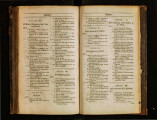
Show No innate praelical Principles. Book I. with the reproach, which is ~very whete prepared for thofe, who dare venture todiil'entfrom the rece1ved Op1mons ofthetr Country or Party? And where is the man to be found, that can patiently .prepare: himfdf to bear the name of Whimlica), Sceptical, or Athdl, wb1ch he 1s fure to meet with, who does in the leafr fcruple any of the common Opinions ? And he will be much more afraid to quejlion thofe Prmczples, when he lhall think them, os moll: meo do, the Standards fet . up by God in his Mind to be the Rule and Toucbfrone of all otherOp1mons. And what can hinder him from thinking them facred, when he finds them the earliefr of all his own , Thoughts , and the moil reverenced by o-the~ r.s 1?6 . It is ealie to imagine, how by the~c means it comes to pafs, that Men worfhip the Idols have been fet up m their Mmds; grow fond of the Notions they have been long acquamted With there; andjfamp t/J< CharaEierso( Divinity, ufON Ahjurdities and Errors, become. zealous Votaries to Bulls and Munk1es; and contented too, light, and dJC m defence of their Opinions. Dumfolos credzt habendos effe Deos, quos ipje co/it, For Iince the reafoning Faculties of tbe Soul, which are almoil conilantIy though not always warily nor wifely employ'd,would not know how to' move for want ol a foundation, and footing, in moil Men, who through lazlnefs or avo~ation, do not ; or for want of time, or true helps, or other caufes, cannot penetrate into the Principles of Knowledge, and trace Truth, to its fountain and original, 'tis natural for them, and almon unavoidable, to take up with fome borrowed Principles ; which being reputed and prefumed to be the evident proofs of other things, are thought not to need any other proof themfelves. Whoever lhall receive any of thefe into their thoughts, witi)out due examination, but believe them, becaufe they arn to be bel,ieved, may take up from his Education, and the fafhionsof his Country, any abfurdity for innate Principles; and by long {lOring on the fame Objects, fo dim his light, <Js to take Monfrers lodged in his own brain, for the Images of the Deity,and the Workmanfl>ip of his Mands. §.:z.7. By this progrefs, how many there are, who arrive at Principles, which they believe innate, may beealily obferved, in the variety of oppolite Principles, held, ;nd contended for, by all forts and degree<; of Men. And he that lhall deny this to be the method, wherein moll: Men proaeed,to the alfurance they have of the unalterable trpth and evidence pftheir Principles, will, perhaps, lind it a hard matter, any other way to account for the contrary Tenets, which are firmly believed, confidently ~Cferted, and which great numbers are ready at any time to feal with their Blood. And, indeed, if it be the privilege of innate Prjnciples, to be received upon their own Authority, without examination, I know not what may not be believed, or how any ones Priociples can be quefiioned. If they may, and ought to /;e examin<ti, and tried, I delire to know bow firfi and innate Principles can be tried ; or at lellil it is reafonable to demand the marks and characters, whereby the .genuine , innate Principles, may be difringui!hed from others ; that fo, amidil the great variety of Pretenders, I may be kept from mifrakes , in fo material a point as this. When this is done, I lhall be ready to embrace fuch welcome, and ufcful, Propolitions; and till then I may with modefty doubt, lincc.I fear uni- ' verial Confent, whlch >S the only one produced, will fcare prove a fuili· c~.ent mark to direCl: my Choice, lmd a!fure me of any innate Principles. From what has been f~id, I think it is pail doubt, that there are no pra· ct1cal Pnnclpleswherem all Men agree; and therefore nope innate. CHAP· .Chap. IV. No inna~e Principles. _ il. 7 ------=-:._ CHAPa IV, Other [anfiderations iotii:erriiilg innat~ Prlnciplet, bot/; fpeculath•i dnd praElzcal. §. •·HAn thofe, wk·howould i>eri'wadeus,thatrhere areinnat P . · . pies, not ta ~n them togerher in grois; butconlidered f. nnc>ly, the parts out of wh1ch thofe Propolitions are made the ' ldrat<>perh, aps, have been fo fqrward to helieveihey were in~ate. YS~~~ /ft, Ideas, winch madeupthofeTruths, were not, ii wasimpoliib!' h1 t~e Propounons, ~ade up of them, fhould be innate, or ciur Kno~tedtt f them he horn With us . . For lf the Idea's be riot innate there IV ~eo ~:hen the Mmd was W>thout thofe Principles; and th~n they ..:ilt"nttme, JOJiate, but be denved from fome other Original. For 'wher 1 I'J ~ themfelves are not, there can be no Knowledge rio Affi e t >e ear or Verbal Propolitions about them. ' em, no Mental, . §. 1. lfwe will attently confider new born Childr<,;, we ffiall have I' He Reafon, to t~mk, that they bring many Id<a's into the World w·'~ tiJem. Fnr, batmg, perhaps, fome famt Idea's of Hun er and T ·'t and ":armth, and fome Pains; lvhich they may have felr i; the lurfr~ t~ere ts •ot ~he leall appearance of any fetled Idta's at all in them ':o{jb~ feita.lly of Idta s, an(we.in&th< Terms, which mal< 11p thrife unive fi.IP e pedtrons, that are efreemed innate Principles. One may perceiv~ ho ro):egrees, aft~rwards Id~a"'s come into their Minds; and that the w, Y r~re, nor .no ot~er, than wha~ Experience, and the Ohfervation ~f~~n no t '?ll)e ul thetr way, furmlh them with; which mi ht he gs, to. 13~tSfie us, that they are not Original Characleis Jh ed •!Iough .Mznd. , mp on the (}i J. l~s impojibl)e for !he fame !bi.ng to be, and ~otto 6e is certainly '' t Jere any ,uch an mnate Prmctple. But can an o'ne thi k ~til aty one fay, that lmp?Jli6ility and Idrnti~y, are tfo innate fd;a'~~ rd t 1ey fuch as all Mankmd have, and bring into the World w'th 1 ; An .a~ they thofc, that ar~ the firil in Children, and anteced~nt \~~j acqmr ones' If they are mnate, they mull: needs be fo. Hatb a C . . an Idea of Impo.fli6Jbty and Idtntity, before it has of White or Black. s hild or ~liter' And lS It from the Knowledge of this Principle rh t !t wut c u ':'• that Wormwood rubb'd on the Nipple, is not th~ fa~e' T~fl~that 1t ufed to recetve from thence J Is it the actual Know led f · ' Me <fl ideme.f[e,f!f 'noNC/Te, that makes a Child difiin ifh f:::r"w'mpo,fiMother and a Stranger; or, that makes it fond of t:he o~e and II een >ts ther? Or does the Mind regulate it felf, and its affenr ~y' Itita'~ yt~he one~ er yet had? Or the Underfi~noing draw C'-onclufio s fro '· .at tt j,htch 11 never yet knew or uriderfiood ? The Names i~poJ'J'tnnet~lej r,ntJty, _ll:knd for t:Vo Ideas, fo jar from b. in,({ iMnatt: Or :,.;r~~kft U; ~ at~ t~lll nIt d~qutres great Care and Attention, to form them right i~ ur n cr an mgs. They are fo far from being brought into the World ;:;:~h us ; fo remote from the thoughts oflnfancy and Childhood th t I th:::.•· upon Examination, it will bo found, that many grown M~n ,:.~t §(. 4· If ~/entity (to in !lance in that alone) be a native lmprellion· and lion equent y fo clear an.d obvious to us, tha~ we mun needs know i; ev rom our Cradles; I would gladly be refolved, by one.of Seven, 01:Seve~~· E~ · ~, |