| OCR Text |
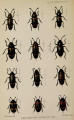
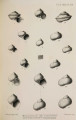
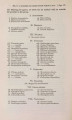
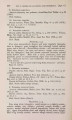
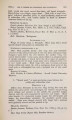
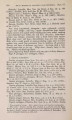
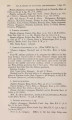
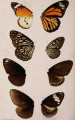
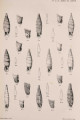
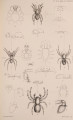
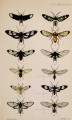
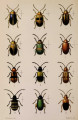
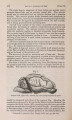
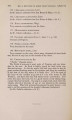
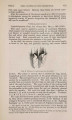
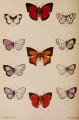
Show 406 PROF. P. M. DUNCAN ON T H E [June 19, NOTES. Merista variabilis, Har. (Stett. ent. Zeit. 1880), is identical with Haplosonyx trifasciatus, Hope ; the type contained in the British Museum agrees with v. Harold's description, that of Hope's being unrecognizable. Merista rufipennis, Har., is synonymous with Leptarthra dohrni, Baly, the latter author having omitted to mention in his description the red colour of the elytra. Nerissus griseo-scutellatus, Karsch (Berlin, ent. Zeitsch. 1882, December), is without doubt identical with Cheiridea subrugosa, Jacoby (P.Z.S. 1882, p. 55). EXPLANATION OF PLATE XLV. Fig. 1. Oides apicalis, p. 399. biplagiata, p. 401. clarkii, p. 401. affinis, p. 400. 2. 3. 4. 5. Mesodonta transvcrso-fasciata, p. 403. Pachytoma gibbosa, p. 403. Fig. 7. Megalognatha cruciata,-p. 401. 8. unifasciata, p. 402. 9. bipunctata, p. 402. 10. Merista oberthuri, p. 404. 11. Physonychis nigricollis, p. 404. 12. Systena discoidalis, p. 405. 3. On the Madreporarian Genus Phymastraa of Milne- Edwards and Jules Haime, with a Description of a new Species. By Prof. P. MARTIN DUNCAN, F.R.S. (Communicated by Dr. SCLATER, F.R.S.) [Received May 29, 1883.] CONTENTS.-I. Introduction. II. The Generic Diagnoses of Phymastrcea given in 1848 and 1857. III. The emended Diagnosis of the Genus. IV. Description of the Species hitherto known. V. Description of a new Species. VI. Remarks on the Structures of Phymastrcea irregularis, Dune. VII. The Affinities of the Genus with others of the Recent Coral-fauna. VIII. The Affinities with Extinct Genera. I. Introduction. The species of the genus Phymastraa are rare ; hitherto only two have been described, and a third is now brought forward for the first time. The genus belongs to the subfamily Astraeaceae of the family Astraeidae, and all the species are recent forms. Their structures are very remarkable, and recall in some points those of fossil forms. In fact the genus, which is remarkably well defined, is exceptional amongst the recent Astraeidse, has a very old-fashioned appearance, and would not have been out of place in an early Secondary coral-fauna. The species were studied in the first instance by M M . Milne- Edwards and Jules Haime, and they included them in the genus Phymastraa, which was established for the purpose in 18481. Sub- 1 Comptes Rendus de TAcademie des Sciences, t. xxvii. p. 494. |