| OCR Text |
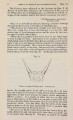
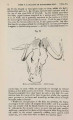
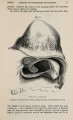
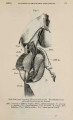
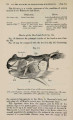
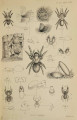
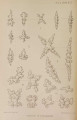
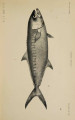
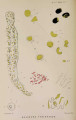
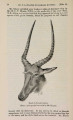
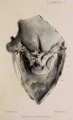
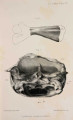
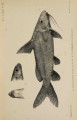
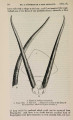
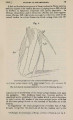
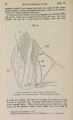
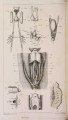
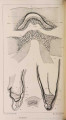
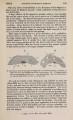
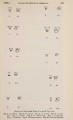
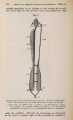
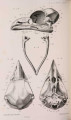
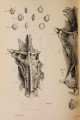
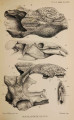
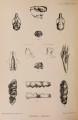
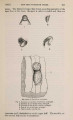
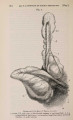
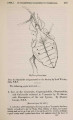
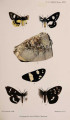
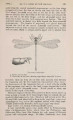
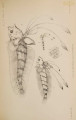
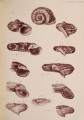
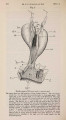
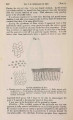
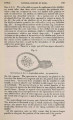
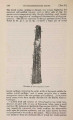
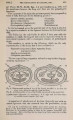
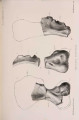
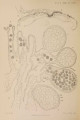
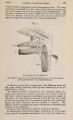
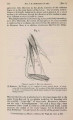
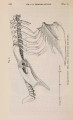
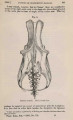
Show 330 PROF. H. H. GIGLIOLI ON A NE*W GADOID [June 18, fish ; they are inserted below and in front of the pectorals, at the and on each side of the great abdominal cone. They are of great size, and the very robust rays, five in number, are all elongated and considerably exceed the intervening membrane, which only unites their basal portions ; the internal and external rays are considerably less developed than the three median ones, the internal one is the shortest; both are simple and without any trace of terminal dilatations. The three median rays all termiuate in a large beautiful lanceolate leaf-like blade, through which, however, the ray continues to the pointed extremity ; they are all prolonged far beyond the two first mentioned rays, but the outer one is considerably shorter than the other two, it is smooth and its terminal blade is smaller The third and fourth rays, counting from the outer one, are subequal, and bent backwards extend very nearly to the root of the tail ; at about the basal third of their length they both present a singular angular dilatation, which looks like a thickened articulation, but which is merely, so far as I can make out, a membranous dilatation. The great lanceolate terminal blades are very large, being little less than one fourth of the total length of the ray which supports them ; their edges are sinuous and they terminate in a fine point. Judging from their length, strength, and development, these ventral paddles must be most efficient for swimming ; I know of no other fish possessing anything like them, and have therefore thought proper to derive from so peculiar a character the generic name which I have proposed for this singular fish. The next remarkable feature of my Eretmophorus is the huge abdominal cone, the base of which occupies the entire space between the insertions of the ventrals and that of the anal fin. This cone appears to develop with age, and it is certainly larger and more prominent in m y oldest and biggest specimen, equalling in height that of the body just behind the pectorals, where it is greatest. This abdominal cone is quite smooth; its skin, devoid of scales, is silvery. I have not ventured to open it in any of the three specimens yet discovered, for fear of damaging to a certainty these rare and very delicate creatures ; but the supposition that it contains most of the alimentary canal cannot be far from the truth ; at its apex, which becomes cylindrical, is an aperture, evidently the vent, and behind this a slender conical papilla on which I could not distinguish anything like an opening. The scales cover the whole body except the head and abdominal cone, which are, as I have said before, naked. They are small, very adherent, cycloid, and marked with concentric lines." I have figured a few magnified (Plate X X X I V . fig. 1), to give an exact idea of their characters ; they are very similar to those of Hypsirhynchus hepaticus, Facciola. A thin pellucid epidermal layer covers them. Only three specimens of Eretmophorus kleinenbergi have, so far as I know, yet been captured and preserved; they were caught alive with a hand-net along with other pelagic animals on the surface at the mouth of the harbour of Messina, as the current was flowing in. I owe them to the kindness of m y friend Professor Nicolaus Kleinen- |