| OCR Text |
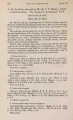
Show 1889.] ON SOME SPECIES OF THE GENUS RHACOPHORUS. 27 Little had been added to our knowledge of this curious form since the publication of the notice of it in Dresser's * Birds of Europe (iv. p. 383, pi. 242). The specimens in the Society's collection had been purchased from M. Augeard, Preparateur Naturaliste, 22, Rue des Casernes, Oran, and were believed to have been captured in the south of the Province of Oran. In a recently published number of the ' Journal fiir Ornithologie ' (1888, p. 225) would also be found a notice of specimens of this Lark having been obtained by Dr. A. Koenig in the Tunisian Sahara in May 1887. Dr. Giinther, F.R.S., exhibited and made remarks on some fishes which had been dredged up by Mr. John Murray off the west coast of Scotland, and were not previously known to occur in British waters, viz., Cottus lilljeborcjii (Collett), Triglops murrayi, sp. n., Gadus esmarhii (Nilss.), Onus reinhardti (Collett), Fierasfer acus (Briinn.), Scopelus scoticus, sp. n., and Stomias ferox (Rnhrdt.). The following communications were read :- 1. On the Species of Rhacophorus confounded under the name of R. maculatus. By G. A. B O U L E N G E R. [Received January 15, 1889.] A recent reinvestigation of the material in the British Museum has convinced me that several species have been confounded by me, as well as most of m y predecessors in Indian herpetology, under the name of Rhacophorus (or Polypedates) maculatus. Apart from R. sexvirgatus, Gravh.1 (quaelrilineatus, Wgm.), which is nothing but a colour-variety of the eastern form, R. leucomystax, Gravh. (rugosus, D. & B.), two species have been described, upon the value of which herpetologists have been in doubts, viz. Polyp, cruciger, Blyth, and P. scutiger, Ptrs., both from Ceylon. The former was separated on account of its larger size and coloration. Nevill, who has recently taken up the matter again, distinguishes it from R. maculatus by its much larger size, stouter feet, and the uniform colouring of the hinder part of thighs, which never present any approach to the white or yellow spotting and marbling observable in R. maculatus. Neither the characters pointed out oy Blyth nor those given by Nevill can serve to distinguish i2. cruciger from the continental R. maculatus, if the latter be taken in the customary comprehensive sense ; and the total absence of white spotting on the thigh is so far from being constunt that one of the specimens in the British Museum, 1 Hylorana longipes, Fischer, of which the type specimen is now in Museum, is another synonym of this variety. |