| OCR Text |
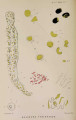
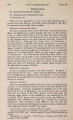
Show 54 MR. F. E. BEDDARD ON JEOLOSOMA TENEBRARUM. [Feb. 5, matter, after being liberated from the cells containing it, was treated with an alkali (ammonia and potash were used), it altered its colour into a fine reddish purple; this could be changed back again into a yellowish green by treatment with mineral acids. When the coloured cells were treated by an alkali in situ, their colour changed gradually to a dirty brown; they never exhibited the fine purple hue shown when the pigment was expelled from the cell. The pigment was dissolved by turpentine forming a gamboge-yellow solution, which soon faded ; this could be converted into violet by alkali. These reactions appear to show that the green pigment in JEolosoma tenebrarum is not chlorophyll. It resembles, in fact, in the changes of colour produced by alkalis and acids, certain pigments described by Moseley (" On the Colouring-matters of various Animals, and especially of Deep-sea forms dredged by H.M.S. Challenger," Quart. Journ. Micr. Sci. vol. xvii. 1877, p. 1) and other observers, and is possibly a member of that numerous class of pigments which serve a respiratory purpose. It is curious that the colour of the pigment, dirty green when acid, and purple when alkali, appears to be more like that of the perivisceral corpuscles of Spatangus purpureus, as described by Geddes (" Observations sur le fluide perivisceral des Oursins," ** Arch, de Zool. Exp. t. viii. (1879), p. 483), than any other pigment of which I can find a description. In neither Bonellein nor Chloro-cruorin does there appear to be, judging from the papers of Sorby ("On the Colouring-matter of Bonellia viridis," Quart. Journ. Micr. Sci. vol. xv. 1875, p. 169), Lankester (Journal of Anat. & Phys. vol. ii. and vol. iv. 1870), and MacMunn (" On the Chro-matology of the Blood of some Invertebrata," Quart. Journ. Micr. Sci. vol. xxv. 1885, p. 469), a change of colour exactly like that of the green pigment of JEolosoma ; and these are precisely the pigments which one would be, a priori, disposed to compare with that of JEolosoma, since they are Annelid pigments. However, in the absence of spectroscopic data, it is impossible to make any comparisons of great value. Bonellein, which is a green pigment, is converted into violet by the action of acids; it. evidently therefore differs materially from the pigment of JEolosoma. According to MacMunn (loc. cit. p. 478), chlorocruorin, when treated with an alkali after rectified spirit, became yellowish. I could not obtain this reaction, as the alcohol decolorized JEolosoma tenebrarum2. The pigmented cells of JEolosoma are by no means unlike those of Tkysanozoon3 (see Lang, "Die Polyclader," Naples Monographs, 1 This pigment appears to be Echinochrom (see MacMunn, " On the Chroma-tology of the Blood of some Invertebrates," Quart. Journ. Micr Sci vol xxv (1885) p. 483. 2 There are other green pigments of course, about which, however, nothin**** appears to be known, except that in some cases (e. g. those of Trochesta Phulh-doce) they yield no absorption-bands. ' * 3 While working at the Plymouth Biological Station in August 1888 I observed a Planarian with large green spots exactly like those of Molosoma (so |