| OCR Text |
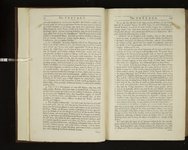
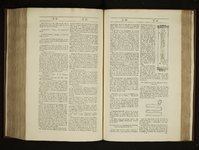
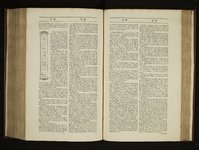
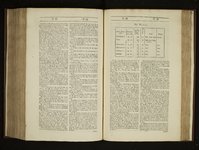
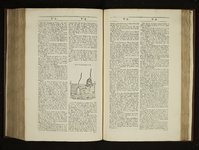
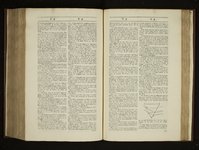
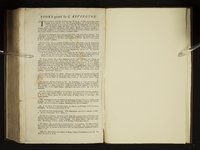
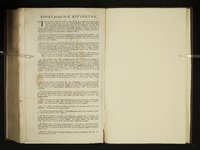
Show te “ 4 t. That the Plants which weighed about By a Man in 24 Hours +3 Part of an Inch; 3 Pounds, per{pired abcut 30 Ounces in a and by the following Plants, viz. the Vine, the Sun-flower, the Cabbage, the Apple-tree, the but ina warm Night it perfpired only3 Ounces, and nothing in a cold Night ; nay, fometimes Lemon-tree, +a. vis, ata, sip Part of an Inch in 12 Hours. ‘That when the perfpiring Surface is diminifhed by taking away the Leaves ; the Power of imbibing is likewife diminifhed; for the fame, which with the Leaves on, imbibed 30 12 Hours Day, in the Month of uly 1724. it gain'd Weight by imbibing Dew. 2. That as the Area of the Surface of the Leaves was equal to 5616 {quare Inches ; and the Area of Roots only to 2286 {quite Inches, the Water or Moifture imb'b’d bythe Roots to fupply the Perfpiration at the Leaves, muft move fafter in the Roots than through the Leaves, in the Proportion of 5 to 2. But in the Stem, whofe tranfverle Section was one fquare Inch, fafter than in the Leaves, in the Proportion of 5616 to 1. 3. That by comparing his Experiments made onthis andother Suu- Flowers and Plants with Dr. Kei xDeriments mention’d in the Medicina Statica Britannica, it is evident, that a Man (Surface for Surface) perfpires more than a Plant, in the Proportion of 3to 1. ‘That the Quantity of the Food of a Manis to the Food of a Plant nearly as 7 to 2; but Bulk for Bulk, the Flant imbibes into its Veffels Ounces in 12 Hours ; without the Leaves, im« bibed only 1 Ounce. "L hat Frure will imbibe through the Stem, in Proportion toits Surface, he tried in an , pple, which imbibed as much as two Leaves equal to it in Subftance. ‘That as the Leaves draw Nourifhment to the Bloffoms and Fru't, fo they growlarge firft in thofe Places where the Bloffoms are, ‘YVhat Hops, in the Middle of an Hopground thrive beft, becaufe they imbibe and perfpire leaft. That by go00 Hop-Vines growing on one Acre of Ground, 220 Gallons of Water are imbibed in a 12 Hours Day; which Quantity of Water is equal to a Depth of 4, Partof his a very great Surface, and thereby (Per/pi- an Inch fpread on the fame Surface. That Fire-blafts (as the Gardeners call them) may be occafion’d by folar Rays reflected from, or condenfed by Clouds, or even colleGted by Means of the denfe Steams, which arife moft plentifully in the Middle of the ration promoting itsimbibing of rhe Sap) per- Hop-Ground. fpires 17 times more than a Manin Proportion Phat the perfpiring Matter of Trees is not protruded by the Power of the Veffels, but exhaled by Heat, which he proves byfeveral 17 times more Fluid than the Quantityof the Chyle which enters into a Man’s Veffels; and that becaufe, as the Sap to Flants is leis nutritive than Chyle to Man, it muft be more in Quantity: To fuck in the more Sap, a Plant to their refpective Weights. 4. That a Manor a Plant mayperfpire different Quantities, and yet continue in an healthy State. A Man may perfpire in 24 Hours from 1 Poundand anhalf to 3 Pounds; and a Plant, curious Experiments. He made Trees imbibe Spirit of Wine and other Liquors impregnated with Aromaticks which at one time perfpired but 16 Ounces, may, without being le{s healthy, perfpire 28 Ounces in the fame Time. which gave a Smell and ‘Tafte to the St Leaves, and Wood, but could not penets to the Fruit, byreafon of the Fineneis of the Capillary Sap-Veffels near the Fruit, which Mr. Hales obferv’d, That in order to fupply affimilated to their own Subftance the high- the Evaporation in the Leaves of a Vine, the Sap rofe 152 Inches in 12 Hours, fuppofe the Sap to rife as denfe as Water ; but if it rifes in a Steam, which muft at Jeaft be 10 times rarer than Water, then the Velocity of the Sapwill be ro times greater, and confequentlyrife at the Rate of 125 Inches in.an Hour. tafted and perfum'd Liquors, Spirits kill’d the Trees, as far as they were imbibed, but fcented Waters did not, He receiy’d in proper Veffels the Mattet peripired from Trees, which is a taftele: Water; but corrupts and ftinks fooner thi common Water, N. B. That the Heat of the Sun foould rarefy He weigh’d three Cubick fort of (Brick) Earth, taken great deal more, to drive it iuto the Roots of of the Earth downwards, in Plants, is very probable from fome Obfervations lighteft of which was about twi made by Mr. H. Beighton and Dr Defaguliers Gravity of W-ter: Thenfetti upon the Engine to raife Water by Fire ; whereby found by the Lots of Weight it appears that the Steam or Vapour of boiling they contain’d: the greateft Qr Water is rarer than the Water from whichit from a Cubick Foot being1 was produced above 13000 times, whenits Ela- leaft 6 Pounds rr Ounces / fiicity is equal to that of common Aur. In order to find the } This curious Experimenter, by h’s Obfer- Air in Greenehoutes and in Stoves the- Moifture of the Earih to that Degree, or a vations on twelve Ever-greens, found, that they perfpire mvch lei3 than other Plants, and Compares them to the exanguous ‘Tribe of Arfimals; whict as they peripirelittle, fo they live the: hole Winter without Food. He likewife oblerv'd, what Part of an Inch in Thicknefs is peripired by a Man, and by feyeral Plants: 4 Degrees of Heat at fevera] De} Earth, and in Hot-beds, he providec rometers, the Stems of which were of Lengths, but adjutted in thei fo that they beganat their ended at go Degrees, equal to warm Water, VE VE the Hand, without ftirring it about, which is the middle Point between freezing and the Heat ofboiling. By theie Thermometers he obferv’d the Degrees of Heat, in feveral Cafes, to be as follows: Of the Blood = 64. Of the human Body = 54. Milk from the Cow ; and Heat fit to batch Eggs =55. Urine=58. Temperate dir=18. Greate Heatof Sun-fbine in the Year 1424, = 74. andin the Year 1424 at 76. The common Heatof the Noon-Sun in July = 50. Air in the Shade at the fame time = 38. The Heat in Mayor June, jfitteft for Plants = from 14 to 30 Degrees. Autumnal Heat = from1o to 20, A Hot-bed too bot for Plants, and about the Heat of Bloodin Fevers = 5. Due Heat of a Hotbed = 56. Heat under a Gla/s at the fame time = 34. andin the open Air = 17 He obferved the Air to be cooler than the Earth out of the Sun, but hotter in Sun-fhine ; and that as foon as the Sunis fo far decreas’d, asno longer to give a brisk Agitation to (or turn into Steam) the Moifture of the Earth, the Leaves of the Plants fall off. Il. Experiments to find the Force with which Trees imbibe Moifture. This Author contrived an Aqueo-mercurial Gage, in order to make a juft Eftimate of the Force with which the Moifture is dtawn up by Plants and Trees. He took a Glafs Tube of an Inchdiameter, and about eight Inches long into one End of which he cemented a fmaller Tube of about one-fourth of an Inch diameter, and eighteen Inches long; into the other End he fucceffively cemented a Root or Branch, or Stem of a Tree or Plant, whofe imbibing Force he wanted to find out; which he did in the following manner, viz. He turned the {mall End of the Gage upwards, and having poured Water into it, down upon the Wood cemented in, he ftopped the Orifice with his Finger; then turning the little End downward again, he plac’d it into a Veflel of Mercury, before he took off his Finger : Which when he had done, he made his Obfervations, For as the Plant imbib’d the Water, the Mercuryrofe up in the {mall Tube, following the Water, and fhewing, by its Height, the Force of imbibing; and for every Inch that the Mercury rofe, Water would have rifen 13> Inches, asit is fo much lighter fpecifically than Mercury. With this Gage he made Experiments upon Roots and Branches in anereét, Branches in an inverted Situation ; large ones as well as fmall, even to Sprigs of Plants and Fruits, and found that all of them imbib’d the Water, {0 as to raifé the Mercury in the fmall ‘Tube, but to different Heights. The Mercury wasrais’d the quickeft, and to the greateft Height, viz. twelve Inches in feven Minutes by a Nonpareil Branch, two Feet high, with twenty Apples, and feveral lateral Branches, whofe tran{verfe Section was Sve-eighths of an Inch diameter. Tt isto be obferved, that the Mercury role higheft in a warm Sun; but the whole Force of imbibing was much greater than the Mercury fhould thew, becaufe feveral Bubbles ofAir came out ofthe Seétion of the Branch as the Water went up, which happen’d moft in large Branches, which raifed the Mercury but to a {mall Height; but Branches ftripp’d of their Leaves, hardly raifedit at all; He alfo made Peas imbibe Water under the Preffure of great Weights, and found that Peas, when twell'd, fuftain’d a Weight equal to 1600 Pounds bytheir Force ofimbibing and growing. The Force of imbibing he thews to be owing to the attractive Power of the Particles of which Plants are made up; all kinds of Wood (even Cork) when thcir Particles are welg foak’d, being heavier than Water. N. B. It is very difficult to foak Cork fo tho J roughly as to make it heavier than Water; but it was found to be true, in a Tube where a Co hadbeen feal’d up « as to be moveable in th or four Years, [a Ill. Experiments Joewing the Force Rife of the Sap in the Vine Seafon. The faid Author, by a very curious Contri« vance ofGlafs Tubes, {crew’d and cemented at the Top of one another, and altogether fixed to the Stem of a Vine, obferv’d, that in the bleeding Seafon, viz. in March and Aprils the Sap will rife into the Tubes by the Force of the Roots and Stem, to verygreat | leights even abovethe Topof the Vir it did upto the Top of a Tube twenty-five Feet high, in, two Hours, and run out at the faid Tube, tho’ feven Feet above the Top of the Vine: But the Force was fuch, that the Mercury in a Gage (in other Experiments) was pufh’d up 32+ Inches high, which was equivalent to above 43 Feet of Water. This is a much greater Force than the Blood is impell’d with in Animals: Which laft Force he try’d in the Crural Artery of an Horfe, of a Dog,‘and of a Deer ; for having ty’d them downalive upon their Backs, and fix’d a Glafg Tube to the Crural Artery opened, he found that in the Horfe the Blood arofe above eight Feet, in the Dog about feven Feet, and in the Deer not quite fix: Andthefe Heightsare five, feven, and eight times lefs than the Height to which the Sap is rais’d by the Vine, The Sap rifes all Night, but moft in the Morning of a warm Day, but in very hot Weather it ceafes to rife about ten inthe Morning, and then begins to rife again about three or four in the Afternoon; and, during the great Heat, Bubbles of Air drawn in by the Roots come up the Tube from the Section of the Stem, the Sap in the Tubefinking andrifing as the Weather is cloudy or clear, like the Liquor in a Thermometer. [hens That the Force was not only in the Root, but in the Stem and Branches, appear’d’ by feveral Experiments: One of which was That a Vine |