| OCR Text |
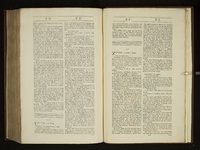
Show ME ME whenit is in Flower; for if it ftand longer, it will not be near fo handfome, nor fo welltafted ; and if it be cut whenit is wet, it will change black, and be little worth: T his fhould be hung up todry in a fhady Place, where it mayremain until it be ufed. If the Soil be good in whichthefe Plants are to be fet, they will afford three Crops every But after uly they feldom prove Spr The third and fourth Sorts grow wild in fhady Lanesin divers Parts of Exg where they {pread greatly at the Roots: ‘Thefe are never us’d in Medicine. The fifth and fixth Sorts are not Natives of this Country, but are preferv’d in curious Bos tanick Gardens for Variety: Thefe maybe propagatedby fowing the Seeds foonafter the are ripe ina Bedof frefh Earth, where, ifthe therefore what Shoots are producd Seeds are good, the Plants will come up the after that Time, fhould be permitted to remain vas, when you muft cut them down till clofe; and after having clear’d the Beds from Weeds, you fhould fpread little fine rich Earth all over them, which will greatly fucceeding Spring, and endure the Cold of our ordinary Winters very well: But if the Plants from which the Seeds are taken, have not good ; had fome of the Male Plants growing amoneft them, the Seeds will not grow, as I have feye- encourage the Roots againft the fucceeding ral times experienc’d. Spring. MESPILUS; [Méoain@-.] The] MENTHA CATARIA ; vide Cataria. MENYANTHES, is Trifolium Paluftre, or Bog-bean. This Plant iscommon upon boggyPlaces in divers Parts of England ; but is never cultivated in Gardens, for which Reafon I ‘hall not trouble the Reader with any farther Account ofit, The Cha rs are; The Leavesare either thofe of the Laurel, as in i laciniated, as in the wi confifis of five Le. of @ Role { not eatable till they The Species are ; 1. Mesprius ; MERCURIALIS: [ This Plant Name from Mercury, becaufe the had a Notion, that the God Mercury this Plant into Ufe.] Mercury. ters are ; ves are crenated, and grow takes its ferrato, five Mefpilu Antients Common Medlar, brought tingham Medlar. 2. Mespixus ; folio Lauri The Large Dutch Medlar. . by Pairs 3. Mespitus; Apii folio, fylveftris, [pi e: The Cup of the Flower confifis of one five Oxyacantha. C. B. P. The Common Haw > which expands, andis cut into three Seg- thorn. . thefe le and Female in different 4. Mesprrus; /pinofa, five O: A The Flowers of the Male grow in long flore pleno. Tourn. 'The Double-flowering of many Stamina Apice: 3 re loaded with Farina: The Ovary of the Female Plant becomes a tefticulated Fruit, having a fingle round Seed in each Cell. The Species are ; t. Mercurtaris; tefticulata, five mas ridis & Plinii. C.B. P. lated Mercury, ‘The Tefticu- vulgarly call’d The Male French Mercury. 2. Mercurtatis 5 /picata, five famina Diofcoridis & Plimii. C. B. P. The Spiked French Mercury. 3- Mercurratis; ‘Montana, tefticulata. C.B. P. Tefticulated Mountain Mercury, commonly cail’d Dogs Mercury. The firft of thefe Medlars more common in the Gardens than at prefent, for fince the has been introduc’d, it hath. was formerly and Nurferies Dutch Medlar obtain’d the Preference, the Fruit ofthis being much larger and better flavour’d than the old one, which hathoccafion’dtheir being cultivated in greater Plenty. Both thefe Sorts may be propagated by budding or grafting °em upon the Hawthorn, or the Pear-/fock, upon either of which they will take very well; and may be afterwards tranfplanted into the Fruit-Garden, either in Standards or train’d againft an Efpalier, in both which Methods they will fucceed very well; but if the larger Sort’ be train’d on an Efpalier, the Fruit will.be muchlarger: But you mutt be careful in pruning, not to fhorten their bearing Branches, for the Fruit being, for the moft part, produc’d at the Extremity thereof ; if they are fhorten’d, it will be cut away. Thefe Plants will grow upon almoft any Soil, but the Fruit will be muchlarger upon a ftrong Soil, rather moift than dry ; though upon a middling Soil they are generally beft flavour’d. Thefe Fruits are permitted to remain upon the Trees till Ofober, when they will bégin to fall; at which time they muft be gather’d, when dry, and laid by in a dry Place, until they become foft, and begin to decay, which is commonly about a Month after they are The Azarola or Neapolitan Medlar. 6. Mespitus; /pinofa, Pyri folio. H. L. The Pyracantha or Ever-green Thorn. before which they are fo very harfh that it is almoft impoffible to eat them. The third Sort is fo very common in Exg- tannica. Park. Theat. The Glaftenbury Thorn. : 8. Mespttus; /pinofa, five Oxyacantid, Virginiana. H. L. The Cockfpur or Vi Hawthorn. {pend much Timein treating of it, fince the great Ufe to which it is apply’d in England, i to make Fences, the mannerof doing whi already defcribed under the Article of Fences and Hedges; but I would only mentionin this Place, that there are two orthree Varieties of this Plant, commonly obferved in the Hedges near London, which differ in the Size oftheir Leaves and Fruit ; but that Sort which pros the fmalleft Leaves is the beft worth ting for Hedges, becaufe their Branches always grow clofe together, fo that the Hedge will clip much clofer, and appear more beautifor it is a common Obfervation, That ranches of all Sorts of Trees grow in a ionable Diftance to the Size of their 7. Mesprius; fen /pina acuta, biflora, Bri- 9. Mesprxus; aculeata, pyrifolia lata {plendens, frutiu infigni rutile, Virg Pluk. Phyt. The Virginian Medlar, with fhi : ning Leaves, and very red Fruit, commit) Fruit. thereof being fown, produce the two Sorts be fown as foon as they are Tipe by thofe who Fruit. 13. Mesprius ; folio 10 gro, fubdulci. Tourn, Dw would cultivate it: Theywill grow upon any blackFruit. Soil or Situation, Fruit. 15. Mespitus; Americana, non 10/a, 4 luteo. he American Haw, with yel- gather’d, when they will be fit to be eaten; 12. Mesprius ; folio fubrotundo, ae bro. Tourn. 'The Dwarf Medlar with ree Promifcuoufly, and are both gather’d indifferently for Medicinal Ufe. Thefe Seeds should ¢ Oxyacantha, fructu albo. Cat. Plant. The common Hawthorn, with white Hawthorn. 5 Mespitus; Apis folio laciniato, C. BP. 4 Mexcurratis 3 moutana, {picata. C.B.P. call’d The Virginian Azarol with red Fruit. Spiked Mountain, or Dogs Mercury. 10, Mespitus; Vi i fol §. Mercurratis; fruticofa, incana, mas. Zari fimilis m S [pi ftrong Boerb. Ind. Hoary Shrubby Male Mercury. long with Hawthorn Phyt. Virginian 6. Mexcuriatis ; fruticofa, incana, tefti- Thorns. culata. Tourn. Shrubby Hoary Tefticulated 11, Mesprrus; Prunifolia, Vi i Mercury, Jpinofa, fruttu nigricante. Pluk. Phyt. Vi The two firft Sorts are annual Plants, which an Hawthorn, with a Plum-leaf and blac growwild in divers Parts of England, and are rarely propagated in Gardens: ‘The Seeds 4. Mespitus; Apii folio, fylveftris, JpiGj land, that it would be to little Purpofe to fourth Sort is a Variety of the third, hich it differs in having fair double . This is propagated by being budded 1 upon the commonSort, and may d upwith regular Stems to the Height or fourteen Feet, and whenplanted Wilderneffes or other Plantations of Trees, of the fame Growth, makes a very fine Ap pearance, during the Seafon ofits Flowering; which is commonly moft part of May ; Flowers being produced in lar } in the common Sort, but a This Tree is pretty common in the Nurieries near London. The Azarola or Ne n Medlar, has been introduced from J where the Fruit is greatly efteemed. This is alfo propagated by budding or grafting it upon Stocks of the common Hawthorn, and fhould be tranfplanted into a moift Soil and a warn n, where it will produce great’ Quantities of Frui nually in England, which thofe of the common : rn, but much larger, and muft be preferv’d till they begin to decay before they are eaten, as the common Medlar. Ihave obferv’d thefe Trees in many Places planted againft warm Walls, as fuppofing them too tender to produce Fruit in this Climate, without fuch Affiftance ; which is a very great Miftake, for I have feen much more Fruit upon Standard Trees than were upon tho againft Walls, ond they ripen’d well and were better tafted. The Pyracantha or Ever-green > was formerly in greater Efteen prefent ; it is commonly planted againft Walls or Build- ings, where it affords an agreeable Profpect in Winter, (efpecially if ic has Plenty of Fruit) the Fruit being at that Seafon of a beautiful red Colour, and are commonly produced in very large Clufters, which together with its ever-green Leaves, renders it worthyofa Place in every good Garden. But in order to have Fruit upon every Part of the Tree, in which its greateft Beauty confifts, there fhould al- ways be a Succeffion of young Branches train’d in, for the Fruit is always produc’d upon the fecond andthird Years Wood; and all thofe Branches which are older never produce any; for want of rightly obferving this Method, moft of the Trees of this kind feldom have any Fruit but toward their extream Parts, which is one Reafon thefe Trees have been fo: muchneglected of late Years. The Branches of this Tree are veryflexible, fo that it cannot be train’d up toa Standard, but muft always have the Affiftance of a Wall, or fome other Building to fupport it. It is very hardy, andwill grow in almoft anySoil or Situation, but it agrees beft with a dry Soil, in which itwill always producea greater Number ofFruit. This may be propagated by laying down the tender Shoots, which are commonly two Years before they will be rooted enough to tranfplant ; (but notwithftanding this, it isa more expeditious Method than to raife them from Seeds, which rarely come up until the fecond Year, and are but of flow Growth the twe fucceeding Years) then they maybe either planted where they are to remain, or into a Nurfery for two or three Years, where you may train 1 according to the Places where they are *d to be planted. It is commonly |