| OCR Text |
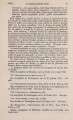
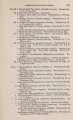
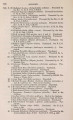
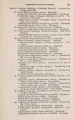
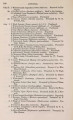
Show 1882.] FROM T H E ARGENTINE REPUBLIC. 597 abouts. I have obtained specimens both in Oran and Buenos Aires but they vary a good deal-the Oran birds being smaller and the glossy colour a distinct blue, whereas in the Buenos-Aires bird it is green ; and, moreover, the habits of the birds also seem to vary slightly. [I am a little doubtful whether Mr. White's specimens really belong to the true T. sayaca; but it is very difficult to determine accurately the various races of this group of Tanagers. -P. L. S.] 25. STEPHANOPHORUS LEUCOCEPHALUS (Vieill.). cf. Concepcion, Misiones, Arg. Rep., June 27, 1881. This bird is not uncommon in Misiones, where it frequents the outside of thickets near the open, or sometimes the open itself, amongst large weeds, on the seed-pods of which it feeds, but is rarely found in dense woods. 26. TRICHOTHRAUPIS QUADRICOLOR (Vieill.). <5 • Concepcion, Misiones, Arg. Rep., June 23, 1881. 2 . San Javier, Misiones, Arg. Rep., June 7, 1881. Iris dark. I shot these birds in the dense forest. 27. TACHYPHONUS CRISTATUS (Gm.). cf. San Javier, Misiones, Arg. Rep., June 6, 1881. Iris dark. An immature specimen, with no white mark under the throat, as is usual in the adult, the whole bird being of a decided ferruginous brown, slightly darker on the back and the top of the head. I obtained my specimen in the forest on the banks of the river Uruguay. [1 have never seen examples of this species from so far south.- P.L.S.] 28. ARREMON D'ORBIGNII, Scl. cf. Sierras de Totoral, Catamarca, Arg. Rep., July 29, 1880. Iris light blue. Met with on the outskirts of the woods, but seldom within them. [One of Mr. White's skins in my collection is marked A. polio-notus, Bp. It is, however, probably A. d'orbignii, mihi, although I have no Bolivian skins for comparison.-P. L. S.] 29. SALTATOR SUPERCILIARIS (Spix). cf 2 • Santo Tome, Corrientes, Arg. Rep., May 11, 1881. Iris wood-brown. Not uncommon at Santo Tome. 30. SALTATOR CERULESCENS, Vieill. cf. Oran, Salta, Arg. Rep., Nov. 6. 1880. 5. „ „ Nov. 13, 18«u. Iris sepia. 1 found these birds very abundant in Oran. |