| OCR Text |
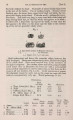
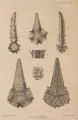
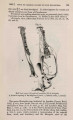
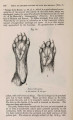
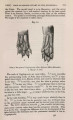
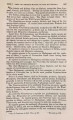
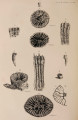
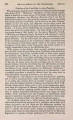
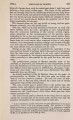
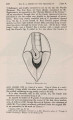
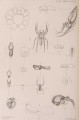
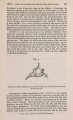
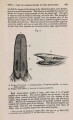
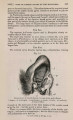
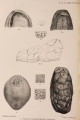
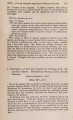
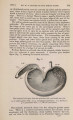
Show 1882]. FROM THE N.W. HIMALAYA. 259 spatular tail; cell long, narrow, pointed at the end. Antennae short, gradually thickening to the end. Larva with several short tubercles on each segment. Pupa broad laterally; head broad and slightly cleft in front; thorax convex above and beneath, angular at the side; wing-cases dilated laterally ; dorsal segments with foliaceous lateral appendages. Type B. philoxenus. BYASA PHILOXENUS. (Plate XII. figs. 5, 5 «, larva.) Papilio philoxenus, Gray, Zool. Misc. p. 32 (1831); Lep. Ins. Nepal, p. 5, pl. 2; Westw. Cab. Orient. Ent. pl. 40. f. 2. Larva 2\ inches long, pale purple-brown ; head and legs shining black ; head small, corneous, sparsely covered with short hair; second segment with two short tubercles on each side, and a transverse flattened corneous tentacular sheath above the head ; third, fourth, fifth, and sixth segments each with eight short tubercles (four on each side), the dorsal series longest; seventh, eighth, ninth, and tenth segments each with six tubercles, and eleventh, twelfth, and thirteenth segments each with four shorter tubercles ; each tubercle red at the apex, and purple black-streaked at the base; intervening-space between the tubercles with a transverse and a dorsal series of paler purple-black spots; these markings all with pale borders ; seventh and eighth segment each with a lateral, short, broad oblique white band. Pupa reddish-ochreous, broad laterally; head broad and slightly cleft in front; thorax convex above and beneath, angular at the side; wing-cases dilated laterally; dorsal segments with foliaceous lateral appendages. The above descriptions of the larva and pupa are taken from specimens found by Mr. Hocking " feeding on a creeping pitcher-plant (Nepenthes ?) on September 20th, at an elevation of 6200 feet. The larvae changed to pupa? on Sept. 27, the pupa making a squeaking noise when touched." BYASA RAVANA. Papilio ravana, Moore, Catal. Lep. Mus. E.I. C. i. p. 96 (1857). Papilio philoxenus, var., Westw. Cab. Orient. Ent. pl. 40. f. 4. MENELAIDES ARISTOLOCHI^E. Papilio aristolochia, Fabr. Ent. Syst. p. 443 (1775). Papilio diphilus, Esper, Ausl. Schmett. pl. 40. f. 1, $ . LAERTIAS PAMMON. Papilio pammon, Linn. Syst. Nat. i. 2, p. 746(1767), 6- Papilio polytes, Linn, ibid., $ . " Larva on lemon-tree, June 19th. The perfect insects (male d female of pammon form) fly from March to December, at an elevation of 6000 feet The polytes form, $, is more restricted to the hot valleys, not appearing before June, and very rarely found above 4000 feet." 17* |