| OCR Text |
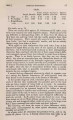
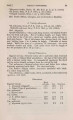
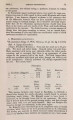
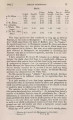
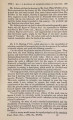
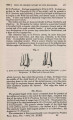
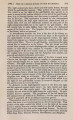
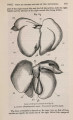
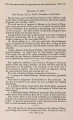
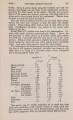
Show 162 PROF. ST.-GEORGE MIVART ON THE ALUROIDEA. [Feb. 7, its inner cusp is much larger relatively ; it is really the largest tooth, and has three roots. - is shaped like -"-, but is smaller, with two outer cusps and one large inner cusp ; it has two roots. p-j is broader in proportion to its length and has less talon, but a more marked anterior tubercle. ^ is much broader in proportion to its length, and its cusps are less pointed and prolonged. Its talon is raised to the level of the front part of the tooth, and forms the tooth's hinder half with four small cusps arranged in a semicircle, while the front half of the tooth bears three larger cusps, one foremost and the other two side by side. ^ , is quinquecuspidate, with two large cusps in front (not side by side), and three smaller ones behind arranged in a semicircle. . . . . D 2 Comparing the deciduous teeth with those of Viverra, I find -- with less talon, -- (the deciduous sectorial) with a relatively smaller internal cusp and with the fourth cusp a little smaller. This tooth is decidedly more sectorial than is the permanent sectorial tooth, its posterior cusp being relatively larger. -"- is much like that of Viverra, but is rather more quadrate. ^-2 and g-^ have less talon than in the Civets. ^ is more sectorial than the permanent sectorial tooth, and is very like that of the Civet, except that its talon is rather smaller and the tuberosities upon it (especially the innermost one of them) less developed. As examples of the considerable differences in the forms and sizes of the teeth in different species or races, I may perhaps be permitted to remark that the British-Museum specimen called P. macrodus by Dr. Gray well merits its name from the large size of its teeth'. There is no skin of this species in the collection; and its habitat is unknown, j ^ are very small in the skulls named P. larvatus, P. grayii, and P. lanigera in the national collection ; and they are rather small in P. zeylanicus and P. bondar. ^-^ (the sectorial teeth) are very sectorial in character in the forms named P. hermaphroditus, P. bondar, and P. lanigera. They are, on the other hand, more quadrangular and very unsectorial in form in P. macrodus, P. nigrifrons, P. larvatus, P. grayii, P. philippensis, P. zeylanicus, P. leucomystax, and P. fasciatus. In the Museum of the Royal College of Surgeons there is a skull (No. 4304 B ) in which ^ | are entirely absent. It comes from Nepal. In the British Museum there is also a skull (No. 154 5), which was purchased from the Zoological Society and said to have come from Manilla, in which g*i are also entirely wanting2. But the Manilla skull has - and - more quadrate and - much thicker; also m is wider and ^ is larger; and p-j is wider and more 1 P. Z. S. 1864, p. 538. 2 O n the left side of the skull there are two small holes in the place where - would be were it present. These holes, however, look more like small fractures or some pathological condition than like alveoli. |