| OCR Text |
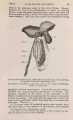
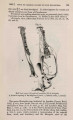
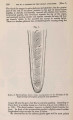
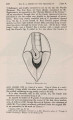
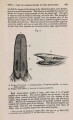
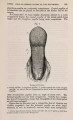
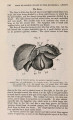
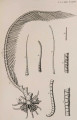
Show 1882.] ANATOMY OF THE TODIES. 443 warded to me, with other valuable specimens, four examples in spirit of the Tody of San Domingo (Todus dominicensis). It is on the examination of these two species that the following paper is based. Dr. Murie has given us, in his article on Todus,1 an exhaustive account of the opinions held by previous writers as to the position of the Todies, as well as a valuable description of their osteology, and reference to what was known of their visceral anatomy. To this paper I therefore refer any reader interested in the literary history of the group in question. Since its publication Sundevall, Garrod, and Sclater have all treated of the classification of birds. The Swedish ornithologist2, relying as usual solely upon external characters, was misled into placing Todus amongst the Passeres, in the close vicinity of the Tyrannidae and Pipridae, though in the same year Mr. Sclater pointed out3 the impropriety of such a position. Garrod at first4 made the Todina with doubt a subfamily of the Coraciidae, the Momotina forming another; but subsequently, on discovering that the Momotidae lacked colic caeca5, removed the latter altogether from the group of Passeriformes, and, adopting the opinion of Murie, Sclater, and others as to the close affinities of Todus to the Motmots, included the Todidae with them, the two " almost certainly forming a single family." Mr. Sclater, in his lately published opinions on the classification of birds6, maintains his earlier view, the Todidae being placed nearest the Momotidae. My better opportunities for observation do not allow me to fall in with the opinion of the last two distinguished naturalists. Reserving for the present comparison, I append my notes on the dissection of the two species of Todus I have examined. The tongue is elongated, about *75 inch long, flat and thin, nearly parallel-sided, though slightly tapering apically, and of horny consistence for most of its length. The root of the tongue, which is more fleshy, has some small spines developed along its base and for a short distance along the lateral margins. These margins anterior to this are frayed-out or ciliated, the direction of the laminae so produced being backwards; the tip itself is quite entire. There is no crop; the proventriculus is, as usual, zonary ; and the stomach (containing insects and seeds in the specimen examined) is a fairly muscular gizzard, lined by hard epithelium. The right lobe of the liver i3 much larger than the left. The intestines are remarkably short, their total length not exceeding 3$ inches. The caeca are well-developed7, aud large for the size of the bird, measuring about one third of an inch. Their shape is that constantly met with in all the non-Passerine Anomalogonatous birds possessing caeca-narrowed 1 " On the skeleton of Todus, with remarks as to its allies," P. Z. S. 1872, pp. 664-680, pl. Iv. 2 ' Tentamen,' p. 60 : Stockholm, 1872. 3 Ibis, 1872, p. 179. 4 Coll. Papers, p. 216. 5 L. c. p. 427. The contrary had been asserted by Blyth and Murie. 6 Ibis," 1880, p. 401. 1 They are erroneously stated by Duvernoy (Anat. Comp. Cuv. iv. [2] p. 284) to be absent. |