| OCR Text |
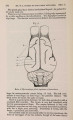
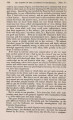
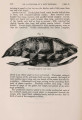
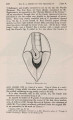
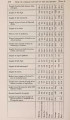
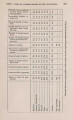
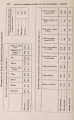
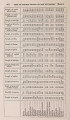
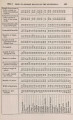
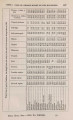
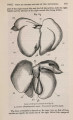
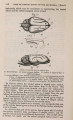
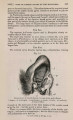
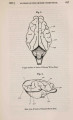
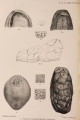
Show 1882.] PROF. ST.-GEORGE MIVART ON THE ALUROIDEA. 187 end of the second phalanx of the fourth digit, which is longer than the index and nearly equals the medius in length. The snout is very pointed in G. vittata, but does not appear to be so much so in G. striata. In both, the tail has long hairs and the muzzle is medianly grooved beneath ; the tarsus is more or less completely bald. The claws are slightly more curved than in the Herpestina. As to the skull, the auditory bulla is formed on the Herpestine type, and has a partition between its chambers, with a considerable aperture for intercommunication. There is a well-developed pterygoid fossa. The external opening of the auditory meatus is small and slightly oval, its anterior margin being produced outwards, but hardly more than is its posterior margin. The postorbital processes are only moderately developed, and do not even nearly meet; the skull is not much pinched in behind them. The paroccipital does not depend ; and the mastoid is much as in Herpestes, as also is the carotid canal. There is no alisphenoid canal ; and the foramen ovale is very near that for the entrance within the cranium of the internal carotid, which is pretty conspicuous. There is no fissure or foramen in the floor of the auditory meatus ; but there is a marked depression where such a foramen is found in Herpestes. The palate is but little prolonged behind the molars; but this region is concave, each side of it sloping into a median depression, the cranium being turned with its base upwards. The palatine foramina are in the anterior part of the palate, which is remarkably broad. The symphysis of the mandible is extremely long, viz. 1"*7, the length of the skull being 6"*2. The zygomata are arched strongly outwards. In the dentition the most noteworthy point is the large size of the canines, and especially the length, strong curvature, and stoutness of the lower ones, each having a marked prominence at the posterior part of the base of its crown. The upper outer incisors also preponderate greatly over the inner ones. The molars and premolars are P 1 P 2 • formed on the Herpestine type ; but ^-^ are absent, and -"- is close to the canine and small, though with two roots. Iii is very sectorial; and the talon of ^ ^ is small. The inner condyle of the humerus is imperforate. I can find no record of the condition of the anus, or of the number of anal glands, neither any note as to prescrotal glands. I, however, anticipate that the latter are wanting, that there is but a single pair of anal glands, and that the anus opens on the surface of the body, and not into a pouch. Galidictis agrees, so far as I know, with Viverra in the characters before enumerated, save as regards nos. 7, 16, 17, 18, 20, 21, 23, 24, 29, 31, 32, 35, 36, 37, 38, 42, 43, and 53. Another genus instituted by Isidore Geoffroy St.-Hilaire for three Viverrine animals from Madagascar, is the genus Galidia (Compt. Rendus, 1857, p. 580, and Mag. de Zool. 1839, pis. 14-17). The type of'the genus must be taken to be that first described, namely G elegans. The skull and dentition of this species are given by De Blainville (Viverras), plate 6. |