| OCR Text |
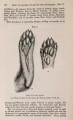
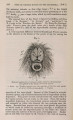
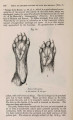
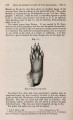
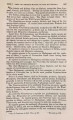
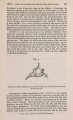
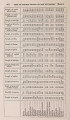
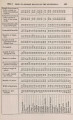
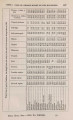
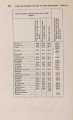
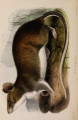
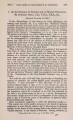
Show 1882.] PROF. ST.-GEORGE MIVART ON THE ALUROIDEA. 157 senegalensis, and have been described and figured by him in the Ann. des. Sc. Naturelles, 5e ser. vol. xix. (1874) pl. iii. fig. 14. These glands were described and figured by Daubenton in Buffon's Hist. Nat. vol. ix. p. 343, pis. 36-40. Therein the Genet dissected (a female) is described as having a distinct orifice at the bottom of each lateral depression, leading thence into the interior of the gland ; but such is certainly not the case in m y G. tigrina, any more than in Chatin's G. senegalensis, in both of which the secretion had only a multitude of minute pores through which to exude. The genus Genetta agrees with Viverra in all tbe characters of the latter before enumerated, except Nos. 24, 38, and 42 ; and there are, besides, the differences in size and markings aud in the more inflated condition of the anterior part of the bulla. The beautiful Viverrine animals known as the Linsangs differ from the foregoing forms sufficiently to warrant their separation as members of the genus Prionodon, which may be said to have been first instituted by Horsfield, since in his 'Zoological Researches' (1824) he proposed for it the term Prionodontidce to denote a subdivision of the genus Felis. H e there describes it under the name of Felis gracilis1, and gives a representation of its external form, and also separate figures of its head, dentition, and paw. Hodgson, in the 2nd part of the 2nd volume (1842) of the 'Calcutta Journal of Natural History,' p. 57, plate 1, describes a so-called second species of the genus Prionodon (P. pardicolor) ; and a third species, P. maculosus, has been described by Mr. Blanford in the 2nd part of the 47th vol. of the Journal of the Asiatic Society of Bengal (1878), p. 152, pl. 6 (external form) and pl. 7 (skull), the skin and skull of which are deposited in the British Museum, and some points in the anatomy of which I have examined. In Prionodon the ground-colour of the coat is white or whitish grey, £with brown or black markings. The markings may form four broad continuous patches running transversely across the hinder part of the body; or spots may replace each continuous patch. The tail is ringed ; and there are dark streaks on the neck and shoulders. P. gracilis is from Borneo, Java, and Singapore ; P. pardicolor from Nepal; and P. maculosus from Darjeeling, Moulmain, and South Tenasserim. As to size, the length of the head and body seems to average about 46", and that of the tail 40"*5. The fur is soft, close, and erect. The limbs are rather short. The pollex and hallux are both well developed. The claws are almost, if not quite, as completely retractile as in the Cats. The tarsus and metatarsus are entirely hairy. Thus in this respect, as also in the character of the claws and the absence of -"-, Prionodon approaches Felis most closely, as Horsfield was careful to point out. The palmar and plantar pads have a greater tendency to break up into separate naked spaces than in Genetta; but, as in that genus, a hairy portion intervenes between the proximal and distal parts of the palmar pad. The pupil is circular. 1 Prionodon gracilis, Gray, P. Z. S. 1864, p. 519. |