| OCR Text |
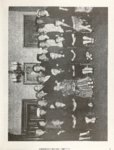
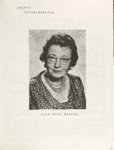
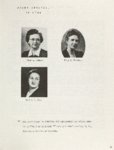
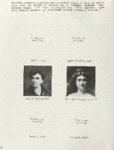
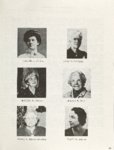
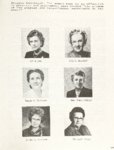
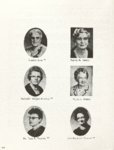
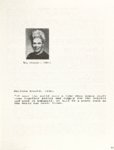
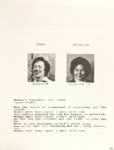
Show ALICE MERRILL Elected 1899 to HORNE 1901 Alice Horne was a descendant of George A. Smith, who entered the Salt Lake Valley on July 22, 1847, planted the first potatoes and turned water onto them from City Creek. Mr. and Mrs. Clarence Merri 11 greeted their new daughter in a log cabin at Fi llmore, Utah, the of the State, and a pioneer community. Their musical center. Mr. Merrill was choir leader, and he helped Alice see the beauty in the mountians, sagebrush and wild flowers. Her mother filled her with the stories of the Arabian nights and other classics. The family was greatly involved in entertainment and dramatics. The all participated in the acting, cos t urnes and pupp.et shows. home The was capitol a family made two trips and she later lived way, miles a on to Salt Lake, a five day trip each ranch with the nearest neighbors nine year a away. brief intervals she stayed with her grandmother Bathsheba W. Smith Salt in Lake where she attended private schools. While staying with her grandmother, she was not permitted to play on Sunday, but was allowed to paint with her grandmother's treasured water aints brought from England. At entered the University at age 14 and graduated four years honors. medieval and with She studied modern ancient, history, biology, astrology, history of English literature, physics and civil government. She also studied art under one of Utah's ot tinger I ater and under J. T. well-know artists, George H. Harwood. Alice later she married George Henry Horne, manager of the Salt Lake Five children were born of the marriage: Dr. Lyman M. Horne, Dr. Albert M. Horne, Mrs. L.C. Winder, Mrs. Joseph J. Jeppson and Virginia Horne. Alice Horne had a reputation as a fine homemaker and skilled seamstress, designing and doing exquisite hand sewing on baby clothes. In 1890, Clearing House. a young married woman she organized the Shakespearean Society, group which read Shakespeare in character. She helped organize the first Primary Association for the L.D.S. Church and served for the General Board of the ReI ief fourteen years as a member of As a on the Board she represented the Relief Society and National Council of Women, of which it was a member, at the Frauen Kongress in Berlin in 1904. A tiny fastidious, fashionable woman, she took with her a wardrobe of the latest American styles and was a standout among the, mostly, mannishly clad suffragettes. Society. While the Her two speeches to the gathering were rated some of the best 49 |