| OCR Text |
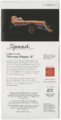
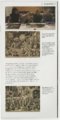
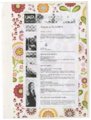
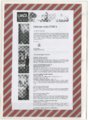
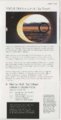
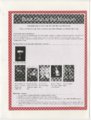
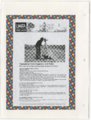
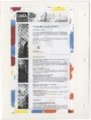
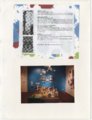
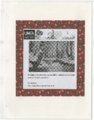
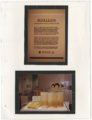
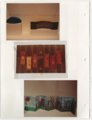
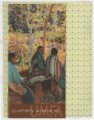
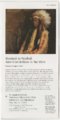
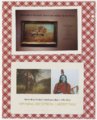
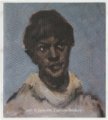
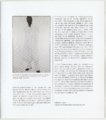
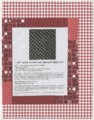
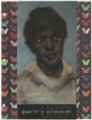
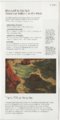
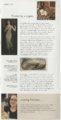
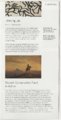
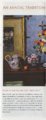
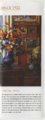
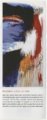
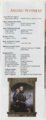
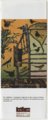
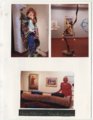
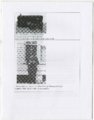
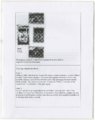
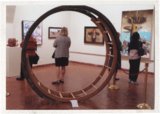
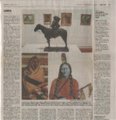
Show WWW.SL TRIS.COM SUNDAY, FEBRUARY 17, 2013 « THE MIX - UMFA D3 'Bierstadt to Warhol: American Indians in the West' » ConUnued from D1 Thinks," plays thematic flipside to the exhibit's wider concerns of cultural identity, deconstruction of stereotypes and the appropriation of images from outside native circles. "We took a large view for this exhibit," said Donna Poulton, curator of art of Utah and the West for UMFA, and also curator of the exhibit. "They're what you might call 'the big themes of art.' And we wanted to do all this in a respectful, educational way." The exhibit, which hangs Feb. 15 through Aug. 11, is as impressive and dynamic as it is thorough in its examination of how indigenous peoples of the American West have been recorded on canvas and sculpture. It encompasses almost every school of visual art, from realism to pop art, from the early 20th century onward. The exhibit opens with sweeping portraits of Ger.man-American painter Albert Bierstadt, EnglishAmerican painter Thomas Moran and Utah's own Minerva Teichert. While the quality of these works is never in doubt, their veracity sometimes is. As Poulton points out, the viewer is left to consider whether some of the early represe:qtations of American Indians were idealized, or even imagined, rather than rendered with an eye toward reality. That's especially true regarding the artists trained in Paris- and German-based schools, who traveled abroad to capture images of the American Indians of Taos, N.M. Compared with other tribes and bands, the Taosarea Indians escaped the nation's westward expansion relatively unscathed. Often, as exemplified by Ernest Martin Henning's 1925 work "Indian Horsemen," they produced work more remarkable for the way the natural world was captured. "They weren't out to exploit," Poulton said. "They were out to find the European ideals of truth and beauty in a people who'd never really been: recorded in art." The more the exhibit pro,gresse s through time, the more intrepid and risk-taking < When » Exhibit hangs through Aug. 11. Museum hours are Tuesdays, 10 a.m.-5 p.m.; Wednesdays, 10 a.m.-8 p.m.; Thursdays and Fridays, 10 a.m.5 p.m.; Saturdays and Sundays, 11 a.m.-5 p.m. Where » Marcia and John Price Museum Building, 410 Campus Center Drive, University of Utah campus, Salt Lake City. Tickets » $5 for youth and seniors, $7 for adults. Free for U. students, faculty and staff. More » Information at 801-581-7332; free admission on the first Wednesday and third Saturday of each month. PHOTOS BY FRANCISCO KJOLSETH I The Salt Lake Tribune Utah Museum of Fine Arts' new exhibit - "Bierstadt to Warhol: American Indians in the West" - includes pieces by (clockwise from top) Cyrus Edwin Dallin (American, 1861-1944) "Appeal to the Great Spirit,n c. 1890, bronze; Andy Warhol (American, 1928-1987) "Cowboys and Indians: Sitting Bull," 1986, screen print; and Kathryn Woodman Leighton (American, 1875-1952) Blanket Man," oil on canvas. 0 "My Grandfather's Funerabout the image of American Indians in art would have al" depicts a Navajo boy gathbeen remiss without the in- ering butterflies under a sky clusion of American Indian pulsing with cosmic energy, artists themselves. "Bierstadt the procession in the backto Warhol" includes several, ground. "Helpless" conveys most n~tabl~ the vivid works the despair of alcoholism, enin th f Indians and native iconography as celebrities and graphic symbols on par with Marilyn Monroe or a soft-drink logo. The one work standing as "the big elephant in the room," as Poulton describes it, is American artist Bill Schenck's "Pocahontas Awaits." Deliberately provocative from every angle, the 2012 oil-on-canvas painting compacts almost every myth and anomaly held by white America regarding native culture. Not stopping at depicting Pocahontas topless and ready for plunder, Schenck places the Virginia Indian in Monument Valley donning a Plains Indian headdress. She peers through binoculars blindfolded, as if she doesn't see what's coming. In a "coup de grace" stroke of style, Schenck delivers it all in flat, paint-by-numbers style, as if condemning the formulaic way most American Indian culture is viewed. "When you cross cultures to portray another beside your own, it's a whole different take," Poulton said. "There's an unconscious layer of interpretation that takes place. [Schenck's painting] is a play on stereotypes and cliches so deep, you almost don't know where to begin." into a room of intoxicated prints by Andy Warhol men strewn on the floor. The "Sitting Bull" and "Geroniobserver's shadow reflected mo" from the 1986 "Cowboys in the light of the room is "a and Indians" series - plus reminder to himself of a path Roy Lichtenstein's enigmathe might have taken." ic woodcut "American Indi- bfultan@sltrlb.com The exhibit's biggest draw an Theme IV." All three play Twitter: @Artsalt et on the ideas of merican Facebaak.cam/fultan.ben • • |