| OCR Text |
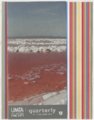
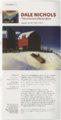
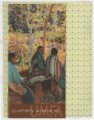
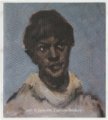
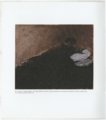
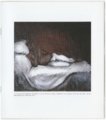
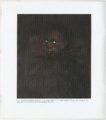
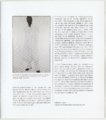
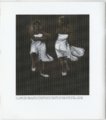
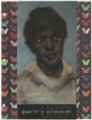
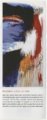
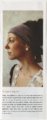
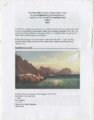
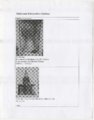
Show With such minimal detail. what does appear on the canvas resonates intensely. The white of teeth and furtiv~ eyes pops against her subdued palette . Strong brushstrokes further direct attention to details-a rippling back muscle, a misshapen hand. a tense smile-that inspire the imagination and spark a narrative th read . Yiadom-Boakye also writes short fiction, and while she considers the practices separate. her stories paint vivid images and her paintings unfold like stories . Stylistically, her words and paint share certain offbeat and dark qualities . In Treatment for a Low-Budget Television Horror with the Working Title: "Dinner with Jeffrey," her short story published in conjunction with her 2010 exhibition Any Number of Preoccupations at the Studio Museum in Harlem. Yiadom-Boakye sets an eerie scene in a shadowy old mansion in the English countryside . As the story develops, it becomes apparent that the public personas of the characters belies their inner wickedness. Yiadom-Boakye seems to play in the subtlety of that tension . in both her stories and her paintings . In earlier paintings, she evoked a disturbed psychology by painting ghoulish figures with exaggerated teeth and disfigured, mask-like faces . More recently, and in this exhibition. her figures are elusive yet potentially more unsettling. By sliding away from academic realism. she opens up the psychological side of her characters and is able to suggest non-representable states like vulnerability, superficiality, or contempt. Whether looking away, smiling, or dancing, these figures-comprised of slightly disjointed parts and unblended brushstrokes-appear unbalanced . Their murky, undefined backgrounds set a peculiar atmosphere, yet no malady is easily detected-until the title of the painting is revealed. Here. the artist asserts her control of language to direct the mood and open possible backstories for her fictional characters. However, much like her paintings, her enigmatic titles lack all of the details needed to complete a narrative . Why, for instance. would the title Further Pressure From Cannibals, 2010 (front cover) be paired with a seemingly benign portrait of a woman? Her closed-mouth smile, furrowed brow. and distant gaze conceal the rest of her story. The dissonance between the image and the text gives the work an irreconcilable tension that captures our imagination . Yiadom-Boakye is skilled at planting just the hint of a narrative, strategically inviting a story fueled by our own creativity. Prior to the 1980s. contemporary artists of A.frican descent had almost no presence in the mainstream art world . And. as art critic Holland Cotter puts it, "on the rare occasions they were admitted to its precincts. they were required to show clear evidence of Africanness-Africanness as gauged by Western standards. that is-in their work. like a visa prominently displayed. " 2 In 2001, Thelma Golden. director and chief curator of The Studio Museum in Harlem. wrote about the concept of "post-black" in the catalogue for the exhibition Freestyle. Acknowledging the diversity of artists of African descent and the complexities of an individual's investigation of identity, "post-black" identified a generation of black artists who, having come of age after the civil rights movement, felt free to "wrap themselves in evidence of their origins, or wear that evidence lightly, or not at all. " 3 Though the term "post-black" has received criticism for being paradoxical (it utilizes an ethnic label in an attempt to refuse racial categorization). it does mark a shift in consciousness in the contemporary art world . 2 Cotter. Holland. "Out of Afri ca. Whatever Africa May Mean ... The New York Times. 4 April 2008. 3 Ibid . |