| OCR Text |
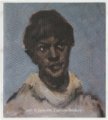
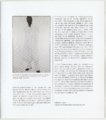
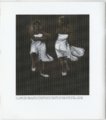
Show This blending of the figure into the background is a technique that painter Barkley Hendricks (American, born 1945) mastered in the 1970s and continues to use today. However, Hendricks, who is also renowned for his treatment of the black figure, more commonly reverses the color scheme to make the skin of his subjects stand out. In Steve, 1976 (fig. 6) a black man's white suit fades into a white background. Like Yiadom-Boakye's figures, his contour slips into an undefined "no place," but his dark brown face jumps out from the painting's whiteness . Hendricks's paintings, with their fashionable, proud subjects, seem to celebrate blackness, much like the colorful paintings of Mickalene Thomas (American, born 1971) and Kehinde Wiley (American, born 1977), whose triumphant black subjects reclaim masterpieces of Western art history. Yiadom-Boakye's paintings, on the other hand, revel in subtlety and avoid overly defiant, revisionist, or celebratory imagery while still drawing attention to the historical inequities of representation . fig . 6. Barkley L. Hendricks. Steve, 1976, oil, acrylic, and magna on linen canvas, 72 x 48 inches . Courtesy of the artist and Jack Shainman Gallery, New York . pictorial representation of the servant by making her figures almost indistinguishable from their dark backgrounds (fig . 5) . Their brown skin, barely delineated, on a muddy background requires the viewer to examine her paintings from multiple angles in raking light to make out a subject. Signaled at first by the whites of their eyes or some other pop of color, these elusive figures gradually materialize as if they were stepping into light. In fact, Yiadom-Boakye paints her subjects doing quite regular things. Whether they are walking to work, having a cup of coffee, going for a swim, or just thinking, their stances and everyday activities are leisurely rather than bold. Even when the artist wants to depict movement, as in Shoot the Desperate, Hug the Needy, 2010 (fig. 7), her title tempers any joyous or festive connotations one might associate with dance. Her work may consider the normalcy of blackness, but it deeply explores the intricacies of the human condition . Beneath her luscious surfaces and behind her smiling faces is a violent current, an emotional distress that is at the same time mysterious and uncomfortably familiar. Whitney Tassie Curator of Modern and Contemporary Art |